
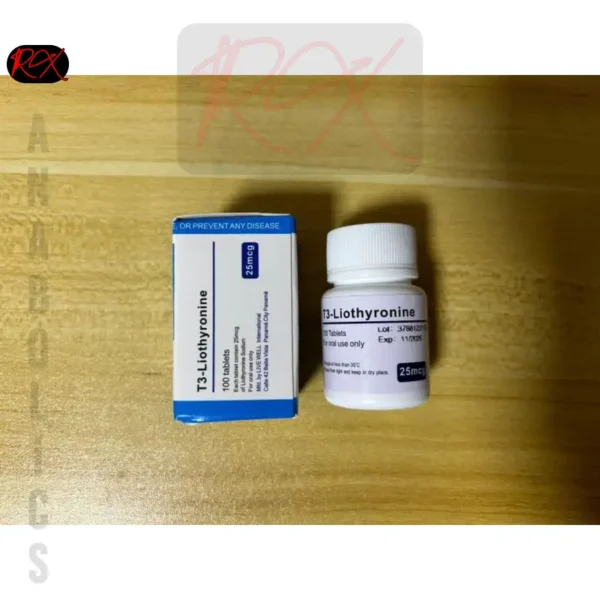
Liothyronine 40mcg (L-T3) | iRoids Pharma
Liothyronine 40mcg is an oral thyroid hormone preparation containing 40mcg of Liothyronine Sodium per tablet. At iRoids Pharma, we carry Liothyronine 40mcg as part of our ancillary and metabolic compound inventory for customers in markets where Liothyronine is legally available.
Liothyronine Sodium is the active compound in this preparation. It is the synthetic form of Triiodothyronine, the most biologically potent thyroid hormone and the primary mediator of thyroid hormone action at the cellular level. Liothyronine acts directly at thyroid hormone receptors without requiring peripheral enzymatic conversion from its precursor Thyroxine, designated T4, before becoming pharmacologically active.
The 40mcg tablet format represents a concentration that exceeds all three standard pharmaceutical grade Liothyronine clinical tablet formats. Pharmaceutical grade Cytomel by Pfizer is available at 5mcg, 25mcg, and 50mcg. The 40mcg concentration consequently falls between the 25mcg and 50mcg pharmaceutical formats, occupying a position outside the standard clinical tablet reference points while remaining within the range of total daily doses referenced in clinical thyroid management literature. This page covers the pharmacology, concentration-specific context, and health and legal considerations relevant to anyone researching this specific preparation at iRoids Pharma. It does not constitute medical advice, recommend or encourage use outside of legitimate medical supervision, or provide dosage guidance of any kind.
Product Specifications
| Specification | Details |
|---|---|
| Product Name | Liothyronine 40mcg |
| Website | iroidspharma.com |
| Active Compound | Liothyronine Sodium |
| Also Known As | L-T3, T3, Cytomel, Triiodothyronine |
| Drug Class | Thyroid hormone, synthetic T3 |
| Concentration | 40mcg per tablet |
| Presentation | Oral tablet |
| Form | Tablet |
| Half-Life | Approximately 1 to 2 days |
| Route of Administration | Oral |
| Mechanism of Action | Thyroid hormone receptor agonism driving cellular metabolic rate, protein synthesis, thermogenesis, and lipid metabolism |
| FDA Approval | Yes for the active compound. Approved for hypothyroidism, pituitary TSH suppression, and thyroid diagnostic testing. The 40mcg tablet format is not a standard pharmaceutical clinical format. |
| Legal Status | Prescription only in the United States and most developed countries. Legal status varies by country. |
| Availability | iroidspharma.com |
The 40mcg Format: What Distinguishes It From Standard Pharmaceutical Liothyronine Formats
The 40mcg per tablet concentration of this preparation carries a specific pharmacological and practical significance that requires direct discussion before any other aspect of this compound’s profile.
Position Relative to Standard Pharmaceutical Formats
Pharmaceutical grade Cytomel by Pfizer, the reference standard for Liothyronine discussion across both clinical and non-prescription contexts, is available at 5mcg, 25mcg, and 50mcg tablet formats. The 40mcg concentration sits between the 25mcg and 50mcg pharmaceutical formats. It is consequently 60 percent higher per tablet than the 25mcg standard format and 80 percent of the 50mcg maximum standard format.
Unlike the 25mcg format at iRoids Pharma, which aligns directly with one of the three established pharmaceutical clinical tablet reference points, the 40mcg format does not correspond to any standard pharmaceutical clinical tablet format. The clinical research literature consequently does not specifically characterize the 40mcg per tablet concentration as a discrete clinical dosing unit in the way it characterizes the 25mcg and 50mcg formats. This distinction is directly relevant to how buyers should interpret the available clinical literature when researching this specific preparation.
Practical Significance of the 40mcg Per Tablet Concentration
The 40mcg format provides a specific per-tablet concentration that is unavailable in standard pharmaceutical Liothyronine tablet ranges. For anyone researching Liothyronine who wants per-tablet delivery between the 25mcg and 50mcg pharmaceutical reference points, the 40mcg format consequently provides a concentration option that the standard pharmaceutical tablet range does not offer.
From a dose-response standpoint, the 40mcg format delivers 60 percent more active compound per tablet than the 25mcg format and consequently produces proportionally more pronounced dose-dependent pharmacological effects per tablet. Every mechanism through which Liothyronine acts, including thyroid hormone receptor activation, thermogenic metabolic rate elevation, protein catabolism effects at supraphysiological concentrations, cardiovascular stimulation, and TSH suppression, is 60 percent more pronounced per tablet at the 40mcg concentration than at the 25mcg format.
Comparison With the 25mcg Format at iRoids Pharma
The 25mcg format aligns with a recognized standard pharmaceutical clinical tablet format and consequently has the most direct relationship to the controlled clinical research literature on Liothyronine. The 40mcg format exceeds this clinical tablet reference point by 60 percent per tablet. As a result, the controlled clinical research base that directly characterizes the 25mcg pharmaceutical format is less directly applicable to the 40mcg concentration than it is to the 25mcg format. The dose-dependent side effect considerations at the 40mcg format are consequently more relevant to the supraphysiological range of Liothyronine’s pharmacological activity than the 25mcg format.
What Is Liothyronine
The thyroid gland regulates cellular metabolic rate throughout the body through thyroid hormone secretion. Triiodothyronine, designated T3, is the most biologically potent of the two primary thyroid hormones and carries approximately three to five times greater receptor binding affinity than its precursor Thyroxine, designated T4. The thyroid gland directly secretes approximately 20 percent of circulating T3, with the remaining 80 percent derived from peripheral deiodination of T4 primarily in the liver and kidneys.
Liothyronine Sodium is the synthetic form of T3, structurally identical to endogenous human T3 and pharmacologically active at thyroid hormone receptors with identical affinity. Unlike Levothyroxine, the synthetic T4 preparation, Liothyronine does not require peripheral deiodination before binding to thyroid hormone receptors. This direct receptor binding characteristic is the pharmacological basis for Liothyronine’s faster onset of action, more predictable dose-response relationship, and more concentrated peak pharmacological effect compared to T4-based preparations at equivalent thyroid hormone activity doses.
The sodium salt formulation improves stability and oral bioavailability compared to the free acid form of the hormone. Following oral absorption, Liothyronine reaches systemic circulation rapidly and distributes to target tissues where thyroid hormone receptors are expressed in virtually every cell type in the human body.
How Liothyronine Works
Liothyronine works through thyroid hormone receptor agonism in cell nuclei throughout the body. Thyroid hormone receptors are ligand-activated nuclear transcription factors that regulate gene expression programs governing cellular metabolic activity, energy production, thermogenesis, protein metabolism, lipid metabolism, and numerous other fundamental biological processes. Activation of these receptors by Liothyronine drives comprehensive changes in cellular function that collectively produce the systemic metabolic effects associated with thyroid hormone activity.
Thyroid Hormone Receptor Activation
Liothyronine binds to thyroid hormone receptors with high affinity, activating receptor-mediated gene transcription programs that regulate cellular metabolic rate and downstream biological processes. The direct, high-affinity binding of T3 to thyroid hormone receptors produces faster onset and more predictable dose-response effects than the indirect activation produced by T4-based preparations requiring peripheral conversion. At the 40mcg concentration, receptor activation is 60 percent more pronounced per tablet than at the 25mcg format, driving proportionally greater downstream metabolic effects.
Basal Metabolic Rate and Thermogenesis
Liothyronine stimulates cellular oxygen consumption and thermogenesis through its effects on mitochondrial activity, uncoupling protein expression, and cellular energy metabolism gene programs. This thermogenic mechanism elevates basal metabolic rate in a dose-dependent manner that becomes increasingly pronounced as Liothyronine concentrations rise above the physiological replacement range. At the 40mcg concentration, the thermogenic effect per tablet is 60 percent more pronounced than at the 25mcg format. Consequently, the 40mcg format produces a more robust thermogenic response per tablet than the standard pharmaceutical clinical reference concentration for this compound.
Protein Metabolism at the 40mcg Concentration
Liothyronine’s effects on protein metabolism are dose-dependent and produce a physiologically critical transition between anabolic and catabolic states as concentrations rise from physiological replacement levels toward supraphysiological exposure. At physiological concentrations, thyroid hormone receptor activation supports net positive protein balance in muscle tissue. At supraphysiological concentrations, the balance shifts toward net protein catabolism as the accelerated metabolic rate drives amino acid oxidation as an energy substrate.
The 40mcg per tablet concentration exceeds the upper standard pharmaceutical clinical tablet format at 25mcg and approaches the lower boundary of total daily doses consistently associated with supraphysiological metabolic effects in non-clinical contexts. As a result, protein catabolism considerations are more directly relevant at the 40mcg concentration than at the 25mcg format. This distinction makes the 40mcg format a particularly important context for discussing the catabolic risk profile of Liothyronine use at concentrations above the standard clinical tablet reference point.
Cardiovascular Effects
Thyroid hormone receptor activation in cardiac tissue drives increases in heart rate, cardiac contractility, and cardiac output through direct genomic effects on cardiac gene expression and through indirect effects from increased peripheral metabolic demand. These cardiovascular effects are dose-dependent and become clinically significant at concentrations exceeding the physiological range. At the 40mcg concentration, cardiovascular stimulation is 60 percent more pronounced per tablet than at the 25mcg format. Consequently, cardiovascular monitoring considerations are more prominent at the 40mcg concentration than at the standard clinical reference format.
Lipid Metabolism
Liothyronine stimulates lipid catabolism through multiple mechanisms including LDL receptor upregulation, acceleration of cholesterol metabolism and bile acid synthesis, and enhancement of lipolytic activity in adipose tissue. These lipid metabolism effects are dose-dependent and more pronounced at the 40mcg concentration than at the 25mcg format. The lipid-lowering and lipolytic effects consequently represent more active pharmacological contributors to the compound’s metabolic profile at the 40mcg concentration than at the standard clinical reference point.
TSH Suppression and HPT Axis Effects
Liothyronine suppresses thyroid-stimulating hormone secretion through negative feedback on the hypothalamic-pituitary-thyroid axis. At supraphysiological concentrations, this TSH suppression is sustained and pronounced, reducing endogenous thyroid hormone production by removing the pituitary stimulus for thyroid gland activity. At the 40mcg concentration, TSH suppression is 60 percent more pronounced per tablet than at the 25mcg format. As a result, the implications for hypothalamic-pituitary-thyroid axis recovery following cessation of use are more significant at the 40mcg format than at the standard clinical tablet reference point.
Clinical Background
The clinical background relevant to the 40mcg Liothyronine format encompasses the extensive FDA-approved clinical literature on Liothyronine as an active compound, considered in the context of the 40mcg concentration’s position relative to standard pharmaceutical clinical tablet formats.
FDA-Approved Indications for Liothyronine
The FDA approved Liothyronine for hypothyroidism treatment, pituitary TSH suppression in thyroid cancer management, and thyroid suppression diagnostic testing. These approvals were developed and clinical protocols established using the standard pharmaceutical Cytomel tablet formats of 5mcg, 25mcg, and 50mcg. The 40mcg concentration consequently sits within the range of total daily doses used across these indications in clinical protocols but does not correspond to a discrete clinical tablet format used in the approved protocols themselves.
Clinical Total Daily Dose Context
Clinical Liothyronine protocols for hypothyroidism replacement therapy typically use total daily doses ranging from 25mcg to 75mcg administered in divided doses across the day. The 40mcg per tablet concentration of the iRoids Pharma preparation consequently falls within the total daily dose range referenced in clinical hypothyroidism management. However, the clinical protocols achieve these total daily doses through multiple administrations of smaller tablet formats rather than through a single 40mcg tablet unit. This dosing architecture distinction is relevant to how the clinical research literature applies to the 40mcg single-tablet format.
Research on Combination T3 and T4 Therapy
Clinical research examining combination Liothyronine and Levothyroxine therapy for hypothyroid patients with residual symptoms on T4 monotherapy provides additional context for Liothyronine’s pharmacological contributions at various concentration ranges. This research base supports the mechanistic understanding of direct T3 receptor activation’s distinct contributions to thyroid hormone physiology beyond what T4-based replacement alone provides.
Liothyronine 40mcg Versus Related Compounds at iRoids Pharma
Versus Liothyronine 25mcg at iRoids Pharma
Both formats contain the same active Liothyronine Sodium compound with identical pharmacological mechanisms. The 40mcg format delivers 60 percent more active compound per tablet than the 25mcg format. Every dose-dependent pharmacological effect including thermogenesis, protein catabolism risk, cardiovascular stimulation, TSH suppression, and lipid metabolism activation is consequently 60 percent more pronounced per tablet at the 40mcg concentration. The 25mcg format aligns with a standard pharmaceutical clinical tablet reference point. The 40mcg format exceeds this reference point by 60 percent and falls outside the standard pharmaceutical clinical tablet range entirely. As a result, the controlled clinical research base that most directly characterizes Liothyronine pharmacology at standard clinical doses applies less directly to the 40mcg format than to the 25mcg format.
Versus Levothyroxine
Levothyroxine is synthetic T4 requiring peripheral deiodination to T3 before achieving full thyroid hormone receptor activation. Liothyronine at 40mcg acts directly at thyroid hormone receptors without conversion. The 40mcg Liothyronine format consequently produces faster onset, more pronounced peak receptor activation, and a more concentrated dose-response effect than a Levothyroxine preparation at a numerically equivalent microgram dose. However, Levothyroxine’s longer effective half-life from the T4 to T3 conversion buffer produces more stable thyroid hormone levels with once-daily dosing than Liothyronine’s shorter half-life allows.
Versus Pharmaceutical Grade Cytomel 50mcg
Pharmaceutical grade Cytomel 50mcg by Pfizer is the closest standard pharmaceutical tablet format to the iRoids Pharma 40mcg preparation in terms of per-tablet concentration. The 50mcg Cytomel format delivers 25 percent more active compound per tablet than the 40mcg iRoids Pharma preparation. Pharmaceutical grade Cytomel carries full manufacturing oversight, verified concentration accuracy, comprehensive batch testing, and complete regulatory documentation. The iRoids Pharma 40mcg preparation is produced outside these regulatory frameworks. Manufacturing standards and quality verification consequently differ fundamentally between the two preparations.
Side Effects and Health Risks
Liothyronine 40mcg carries a well-documented side effect profile based on extensive clinical research across Liothyronine’s approved indications, considered in the context of the 40mcg concentration’s 60 percent higher per-tablet exposure compared to the standard 25mcg clinical reference format.
Cardiovascular Effects
Cardiovascular side effects represent the most serious health considerations associated with supraphysiological Liothyronine use and are 60 percent more pronounced per tablet at the 40mcg concentration than at the 25mcg format. Direct thyroid hormone receptor activation in cardiac tissue drives increases in heart rate, cardiac contractility, and cardiac output. At supraphysiological concentrations, palpitations, arrhythmias, and in severe cases more serious cardiac complications are well-documented in clinical literature. Anyone with pre-existing cardiovascular conditions should not use Liothyronine at any concentration without direct physician supervision. The 40mcg concentration’s position above standard pharmaceutical clinical tablet formats makes cardiovascular monitoring considerations more prominent than at the 25mcg format.
Thyroid Suppression and HPT Axis Recovery
At the 40mcg concentration, TSH suppression is 60 percent more pronounced per tablet than at the 25mcg format. Extended use at this concentration produces more sustained and pronounced suppression of the hypothalamic-pituitary-thyroid axis than at the standard clinical reference format. Recovery of normal HPT axis function following cessation of Liothyronine use at the 40mcg concentration consequently requires more careful consideration than at the 25mcg format. Thyroid function monitoring before, during, and following any period of Liothyronine use is an essential health consideration at this concentration.
Muscle Catabolism
The 40mcg format’s position above the standard clinical tablet reference point places it more squarely within the supraphysiological concentration range where the protein metabolism balance shifts toward net catabolism in muscle tissue. This catabolic shift is 60 percent more pronounced per tablet at the 40mcg concentration than at the 25mcg format. Consequently, muscle catabolism considerations are more directly and prominently relevant at the 40mcg format than at the standard clinical reference point and represent one of the most practically significant side effect considerations at this specific concentration.
Bone Density
Supraphysiological thyroid hormone levels accelerate bone turnover and reduce bone mineral density with sustained exposure. At the 40mcg concentration, the bone turnover acceleration is 60 percent more pronounced per tablet than at the 25mcg format. Extended use at this concentration consequently produces more pronounced bone density considerations than at the standard clinical reference format. Bone density monitoring is relevant for anyone using Liothyronine at the 40mcg concentration over extended periods.
Hyperthyroidism Symptoms
Excessive Liothyronine exposure produces a clinical picture consistent with hyperthyroidism including palpitations, tremor, increased sweating, heat intolerance, weight loss, anxiety, insomnia, and diarrhea. At the 40mcg per tablet concentration, the threshold for producing hyperthyroid symptomatology from a single tablet is lower than at the 25mcg format due to the higher per-tablet active compound delivery. Anyone experiencing hyperthyroid symptoms during Liothyronine use at any concentration should discontinue immediately and seek medical evaluation.
Common Dose-Dependent Effects
Common dose-dependent effects documented across the Liothyronine clinical literature include increased sweating, heat intolerance, tremor, palpitations, nervousness, and insomnia. These effects reflect the systemic increase in cellular metabolic rate from thyroid hormone receptor activation and are 60 percent more pronounced per tablet at the 40mcg concentration than at the 25mcg format.
Legal and Regulatory Status
Liothyronine is a prescription-only medication in the United States and most developed countries. The FDA approves the active compound for specific thyroid-related indications under the Cytomel brand name and as generic Liothyronine in the standard 5mcg, 25mcg, and 50mcg tablet formats. The 40mcg tablet format is not a standard pharmaceutical clinical format and is consequently only available through non-prescription channels outside of compounding pharmacy preparations for specific patients.
In the United Kingdom, Liothyronine is a prescription-only medication under the Medicines Act. The 40mcg tablet format is similarly outside standard pharmaceutical clinical formats in the UK market.
The World Anti-Doping Agency does not currently ban Liothyronine for most competitive sports contexts. However, specific sporting organizations may carry their own restrictions. You are responsible for confirming the regulatory status in your specific sporting context if applicable.
You are responsible for confirming the legal status of Liothyronine in your specific jurisdiction before purchasing from iRoids Pharma.
Frequently Asked Questions
Is Liothyronine 40mcg Available at iRoids Pharma
Yes. iRoids Pharma carries Liothyronine 40mcg for customers in markets where Liothyronine is legally available. Visit iroidspharma.com to check current availability and pricing.
Why Does the 40mcg Format Not Correspond to Any Standard Pharmaceutical Tablet Format
Pharmaceutical grade Cytomel by Pfizer is produced at 5mcg, 25mcg, and 50mcg tablet formats. The 40mcg concentration falls between the 25mcg and 50mcg pharmaceutical reference points and consequently does not correspond to any standard commercial pharmaceutical tablet format. It is available at iRoids Pharma as a non-prescription preparation for markets where Liothyronine is legally obtainable outside of prescription channels.
How Does the 40mcg Format Compare to the 25mcg Format at iRoids Pharma
Both formats contain the same active Liothyronine Sodium compound with identical pharmacological mechanisms. The 40mcg format delivers 60 percent more active compound per tablet than the 25mcg format. Every dose-dependent pharmacological effect is consequently 60 percent more pronounced per tablet at the 40mcg concentration. The 25mcg format aligns directly with a standard pharmaceutical clinical tablet reference point. The 40mcg format exceeds this reference point and falls outside the standard pharmaceutical clinical tablet range, making the controlled clinical literature less directly applicable to the 40mcg format.
What Is the Half-Life of Liothyronine
Liothyronine produces a half-life of approximately 1 to 2 days. This pharmacokinetic characteristic applies equally across the 25mcg and 40mcg formats and is a relevant consideration for maintaining stable thyroid hormone concentrations throughout the day regardless of which format is being researched.
Does Liothyronine 40mcg Suppress Natural Thyroid Function
Yes. At concentrations at and above the 40mcg per tablet level, TSH suppression through negative feedback on the hypothalamic-pituitary-thyroid axis is a primary consideration. TSH suppression at the 40mcg format is 60 percent more pronounced per tablet than at the 25mcg format. Thyroid function monitoring is consequently essential for anyone using Liothyronine at this concentration.
Is the Muscle Catabolism Risk More Pronounced at 40mcg Than at 25mcg
Yes. The 40mcg format’s position above the standard clinical tablet reference point places it more directly within the supraphysiological concentration range where the protein metabolism balance shifts toward net catabolism. Muscle catabolism considerations are consequently 60 percent more pronounced per tablet at the 40mcg concentration than at the 25mcg format and represent one of the most practically significant side effect considerations specific to the 40mcg preparation.
What Are the Most Serious Health Risks at the 40mcg Concentration
Cardiovascular effects including arrhythmias from supraphysiological exposure are the most serious health concerns and are 60 percent more pronounced per tablet than at the 25mcg format. Thyroid suppression and HPT axis recovery considerations, muscle catabolism, bone density effects, and hyperthyroidism symptoms complete the primary risk profile at this concentration. Medical supervision is consequently essential for anyone using Liothyronine at the 40mcg format.
Is Liothyronine 40mcg Legal to Purchase
Liothyronine is prescription-only in the United States and most developed countries. The 40mcg tablet format is not a standard pharmaceutical clinical format. Legal status varies by jurisdiction. You are consequently responsible for confirming the legal status in your jurisdiction before purchasing from iRoids Pharma.
What to Consider Before Purchasing Liothyronine 40mcg
Liothyronine carries one of the most extensively documented pharmacological profiles of any compound discussed in performance communities, supported by multiple FDA-approved indications and decades of clinical use in thyroid management. This documentation applies to the pharmacological and risk profile of the active compound across its standard clinical concentration range.
The 40mcg format at iRoids Pharma delivers 60 percent more active compound per tablet than the standard 25mcg pharmaceutical clinical reference format and falls outside the standard pharmaceutical clinical tablet range entirely. As a result, the controlled clinical research base that most directly characterizes Liothyronine pharmacology at standard clinical doses applies less directly to the 40mcg format than to the 25mcg format. The dose-dependent side effect considerations at the 40mcg format are consequently more relevant to the supraphysiological range of Liothyronine’s pharmacological activity, where cardiovascular stimulation, muscle catabolism, thyroid suppression, and bone density effects are progressively more pronounced.
The iRoids Pharma non-prescription preparation does not carry the manufacturing oversight of pharmaceutical grade Cytomel by Pfizer. Manufacturing standards and quality verification consequently differ fundamentally between pharmaceutical grade and non-prescription preparations.
Liothyronine carries documented cardiovascular, thyroid suppression, muscle catabolism, bone density, and hyperthyroidism-related health risks that are 60 percent more pronounced per tablet at the 40mcg concentration than at the standard 25mcg clinical reference format. Medical supervision, thyroid function monitoring, and cardiovascular monitoring are consequently absolutely essential for anyone researching this preparation.
For customers in markets where Liothyronine is legally available, visit iroidspharma.com to check current Liothyronine 40mcg availability, pricing, and stock levels.
Reviews
There are no reviews yet.
Related products
Tablets
Tablets
Tablets
Tablets
Tablets
Tablets
Be the first to review “Liothyronine (L-T3) 40mcg”