
Pro-Dostinex 1mg (Cabergoline) | iRoids Pharma
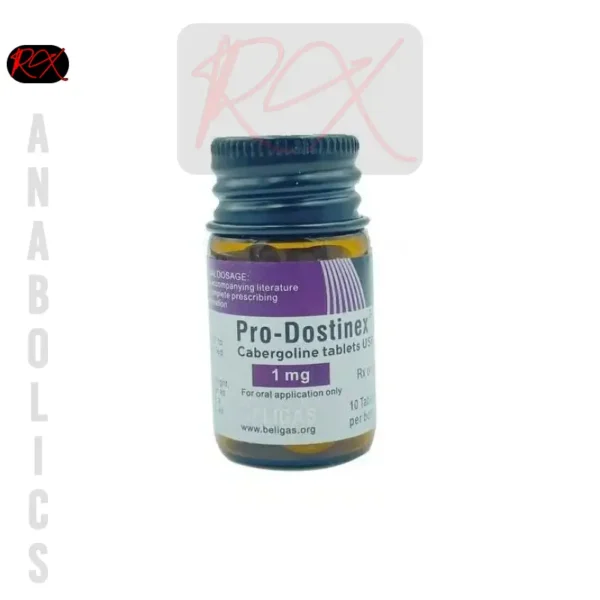
Pro-Dostinex 1mg is an oral dopamine agonist containing 1mg of Cabergoline per tablet. At iRoids Pharma, we carry Pro-Dostinex 1mg as part of our ancillary and hormonal management compound inventory for customers in markets where Cabergoline is legally available.
Cabergoline is the active compound in this preparation. Pro-Dostinex is the brand designation under which this specific Cabergoline preparation is marketed at iRoids Pharma. The compound is widely recognized under the brand name Dostinex, produced by Pfizer, and the pharmacological profile, clinical background, and health considerations applicable to Cabergoline and pharmaceutical grade Dostinex apply directly and completely to this preparation.
Cabergoline occupies a pharmacologically distinct position within ancillary compound discussions in performance communities that no other commonly available compound precisely replicates. It is the most potent and longest-acting clinically available dopamine D2 receptor agonist, carries active FDA approval for hyperprolactinemia, and produces its primary pharmacological effects through a fundamentally different mechanism from every other compound discussed in ancillary and hormonal management contexts at iRoids Pharma.
The 1mg tablet format of this preparation represents a concentration that exceeds the standard pharmaceutical grade Dostinex clinical tablet format of 0.5mg per tablet. This concentration distinction carries specific pharmacological implications that are directly relevant to anyone researching Pro-Dostinex at iRoids Pharma. This page covers the pharmacology, brand-specific context, concentration-specific considerations, and health and legal context relevant to anyone researching Cabergoline at iRoids Pharma. It does not constitute medical advice, recommend steroid use, or provide dosage, cycle, or stacking guidance of any kind.
Product Specifications
| Specification | Details |
|---|---|
| Product Name | Pro-Dostinex 1mg |
| Brand | Pro-Dostinex |
| Website | iroidspharma.com |
| Active Compound | Cabergoline |
| Also Known As | Dostinex, Cabaser, Caber, Cabergoline |
| Drug Class | Dopamine agonist, ergot derivative, D2 receptor agonist |
| Concentration | 1mg per tablet |
| Presentation | Oral tablet |
| Form | Tablet |
| Half-Life | Approximately 63 to 69 hours |
| Route of Administration | Oral |
| Mechanism of Action | Selective dopamine D2 receptor agonism producing prolactin suppression |
| Prolactin Suppression | Potent and prolonged, dose-dependent |
| FDA Approval | Yes. Approved for hyperprolactinemia. |
| Legal Status | Prescription only in the United States. Legal status varies by country. |
| Availability | iroidspharma.com |
About the Pro-Dostinex Brand
Pro-Dostinex is a non-prescription Cabergoline preparation marketed under a distinct brand identity within the iRoids Pharma product catalog. The Pro-Dostinex brand designation identifies this specific preparation as distinct from other Cabergoline products in the non-prescription market while containing the same active Cabergoline compound whose pharmacological effects are referenced throughout the clinical literature under the Dostinex brand name and Cabergoline generic designation.
Buyers researching Pro-Dostinex will consequently find the pharmacological literature for this compound referenced under the Cabergoline generic name and the Dostinex brand name rather than under the Pro-Dostinex brand designation specifically. The pharmacological profile described throughout this page applies to Cabergoline as an active compound regardless of the specific brand designation. Pro-Dostinex at iRoids Pharma consequently carries the same pharmacological mechanisms, clinical reference background, and health and legal considerations as any other 1mg Cabergoline preparation.
What Makes Cabergoline Pharmacologically Distinct
Cabergoline occupies a specific pharmacological position in ancillary compound discussions that distinguishes it from every other compound in this category at iRoids Pharma. Understanding this position requires examining what drives its unique discussion context in performance communities.
Every other ancillary compound discussed at iRoids Pharma operates through mechanisms related to estrogen, androgens, thyroid hormones, or phosphodiesterase enzymes. Cabergoline operates through a completely different mechanism. It is a selective dopamine D2 receptor agonist that suppresses prolactin secretion from the anterior pituitary gland through dopaminergic signaling. This dopamine agonist mechanism has no pharmacological overlap with aromatase inhibitors, SERMs, androgens, thyroid hormones, or PDE5 inhibitors.
Prolactin is a pituitary hormone with a broad range of physiological roles including lactation, reproductive function, immune modulation, and contribution to the hormonal side effects associated with certain progestogenic anabolic steroids. Elevated prolactin, designated hyperprolactinemia, produces symptoms including sexual dysfunction, galactorrhea, and hormonal dysregulation. In performance communities, prolactin elevation from progestogenic anabolic steroid use including Nandrolone and Trenbolone is one of the primary drivers of Cabergoline discussion as an ancillary management option.
Cabergoline’s potency, selectivity, and extremely long half-life of approximately 63 to 69 hours make it the most pharmacologically effective clinical option for prolactin suppression available. No other compound commonly discussed in performance communities replicates this profile through the same mechanism.
The 1mg Concentration: Context and Comparison to Pharmaceutical Format
The 1mg per tablet concentration of Pro-Dostinex requires specific attention because it differs from the standard pharmaceutical clinical tablet format for Cabergoline in ways that are directly pharmacologically relevant.
Standard Pharmaceutical Format
Pharmaceutical grade Dostinex produced by Pfizer is available at 0.5mg per tablet. This 0.5mg format is the only standard pharmaceutical clinical tablet format for Cabergoline and is the concentration at which the entire controlled clinical research base for this compound was accumulated. The 1mg concentration of Pro-Dostinex consequently delivers double the active Cabergoline per tablet compared to the standard pharmaceutical clinical reference format.
Pharmacological Implications of the 1mg Format
Every dose-dependent pharmacological effect including prolactin suppression magnitude, dopaminergic activity, cardiovascular effects, and side effect profile is twice as pronounced per tablet at the 1mg concentration as at the standard 0.5mg pharmaceutical format. Given Cabergoline’s already potent prolactin-suppressing effects at the 0.5mg clinical dose, the 1mg format represents a substantially more aggressive per-tablet pharmacological activity level than the established clinical reference point.
Prolactin Suppression at the 1mg Concentration
Clinical research on Cabergoline in hyperprolactinemia treatment established its prolactin-suppressing efficacy at doses ranging from 0.25mg to 1mg administered twice weekly. The 1mg per tablet concentration consequently falls at the upper end of the individual dose range referenced in the clinical hyperprolactinemia literature. However, the clinical protocols achieving these dose levels used twice-weekly rather than daily administration. This dosing frequency distinction is relevant to understanding how the 1mg per tablet format of Pro-Dostinex relates to clinical reference dosing.
What Is Cabergoline
Cabergoline is a synthetic ergot derivative and selective dopamine receptor agonist developed by Farmitalia Carlo Erba and subsequently acquired by Pharmacia, which was later acquired by Pfizer. It received FDA approval under the Dostinex brand name for the treatment of hyperprolactinemia in 1996. Its development followed earlier dopamine agonists including Bromocriptine, representing a significant advance in potency, selectivity, and tolerability for dopamine-mediated prolactin suppression.
Structurally, Cabergoline is an ergoline derivative with a carbamate side chain that confers its extended half-life and high selectivity for dopamine D2 receptors. This structural characteristic distinguishes it pharmacokinetically from earlier ergot-derived dopamine agonists. The extended half-life of approximately 63 to 69 hours is one of the most pharmacologically significant characteristics of Cabergoline compared to other dopamine agonists and produces practical dosing and management implications that differ fundamentally from shorter-acting alternatives.
Cabergoline demonstrates high selectivity for dopamine D2 receptors over D1 receptors. This D2 selectivity profile underpins its primary clinical mechanism of prolactin suppression through D2 receptor activation on lactotroph cells in the anterior pituitary gland.
How Cabergoline Works
Cabergoline interacts with dopaminergic signaling systems through selective D2 receptor agonism that produces potent and prolonged prolactin suppression as its primary pharmacological effect.
Dopamine D2 Receptor Agonism
Dopamine normally suppresses prolactin secretion from the anterior pituitary by binding to D2 receptors on lactotroph cells. This dopaminergic inhibition of prolactin secretion is the primary physiological mechanism controlling baseline prolactin levels. Cabergoline mimics the inhibitory action of endogenous dopamine at these D2 receptors with high affinity and potency. By activating D2 receptors on lactotroph cells, Cabergoline suppresses prolactin synthesis and secretion in a dose-dependent and prolonged manner reflecting its extended half-life.
At the 1mg concentration, this D2 receptor agonism is twice as pronounced per tablet as at the standard 0.5mg pharmaceutical reference format, producing proportionally more potent and more prolonged prolactin suppression per dose.
Prolactin Suppression Magnitude and Duration
Cabergoline produces dose-dependent reduction in serum prolactin levels. At standard clinical doses, it reduces prolactin levels by 80 to 90 percent or more from elevated baseline levels in hyperprolactinemic patients. The duration of prolactin suppression following a single dose is prolonged, reflecting the compound’s extended half-life. A single dose produces meaningful prolactin suppression for several days. This prolonged duration of action following each dose is one of the most practically significant pharmacological characteristics of Cabergoline compared to shorter-acting dopamine agonists.
Cardiovascular Dopaminergic Effects
Cabergoline produces cardiovascular effects through dopaminergic mechanisms including mild reductions in heart rate and blood pressure at clinical doses. At higher doses including the 1mg per tablet format, these cardiovascular dopaminergic effects are more pronounced than at the standard 0.5mg clinical reference format. Regular cardiovascular monitoring is consequently more relevant at the 1mg concentration than at the standard clinical format.
Cardiac Valve Research Context
Clinical research on dopamine agonists used at higher doses in Parkinson’s disease treatment documented valvular heart disease as a concern with long-term high-dose ergot-derived dopamine agonist use. This cardiac valvular concern was specifically examined for Cabergoline at the doses used in Parkinson’s treatment, which are substantially higher than the doses used in hyperprolactinemia treatment. Research examining hyperprolactinemia treatment doses found the cardiac valvular risk to be substantially lower at the doses used for prolactin suppression. However, this cardiac valvular research context is relevant to anyone using Cabergoline at any concentration and particularly at the 1mg per tablet format that exceeds the standard clinical reference concentration.
Prolactin’s Role in Progestogenic Anabolic Steroid Side Effects
Performance community discussion of Cabergoline is driven primarily by the prolactin elevation associated with progestogenic anabolic steroids including Nandrolone Decanoate and Trenbolone. These compounds activate progesterone receptors and can consequently elevate prolactin levels through progesterone receptor-mediated mechanisms. Elevated prolactin contributes to sexual dysfunction, galactorrhea, and mood changes associated with these compounds in performance community discussions. Cabergoline’s potent D2 receptor-mediated prolactin suppression consequently generates specific discussion as an ancillary management option in relation to progestogenic compound use.
Clinical Background
Cabergoline carries an extensively documented clinical history across its FDA-approved hyperprolactinemia indication and additional studied applications.
FDA Approval for Hyperprolactinemia
The FDA approved Cabergoline in 1996 under the Dostinex brand name for the treatment of hyperprolactinemia, a condition characterized by abnormally elevated serum prolactin levels. Hyperprolactinemia causes include prolactinoma pituitary tumors, certain medications, and idiopathic causes. The FDA approval reflected extensive Phase III clinical trial data demonstrating significant prolactin normalization and superior tolerability compared to the existing standard of care Bromocriptine.
Superiority Over Bromocriptine
Multiple clinical trials directly comparing Cabergoline to Bromocriptine in hyperprolactinemia treatment demonstrated that Cabergoline produces superior prolactin normalization rates, greater tolerability, and a more favorable dosing schedule due to its extended half-life. This comparative clinical data established Cabergoline as the preferred dopamine agonist for hyperprolactinemia management in clinical guidelines. This superiority data is directly relevant to understanding why Cabergoline rather than Bromocriptine dominates performance community discussion of dopamine agonist use for prolactin management.
Prolactinoma Treatment
Cabergoline’s efficacy in reducing prolactinoma tumor size alongside normalizing prolactin levels is documented across multiple clinical studies. This clinical application reflects its potent and sustained D2 receptor-mediated suppression of lactotroph cell activity and provides additional context for understanding the magnitude and duration of its prolactin-suppressing effects.
Parkinson’s Disease Research
At substantially higher doses than those used for hyperprolactinemia, Cabergoline has been studied for Parkinson’s disease treatment as a dopamine agonist for motor symptom management. The cardiac valvular concerns documented at Parkinson’s treatment doses do not apply equivalently to the lower doses used in hyperprolactinemia management. However, this research context is relevant for understanding the broader dopaminergic pharmacology of Cabergoline across the dose range.
Pro-Dostinex Versus Other Compounds at iRoids Pharma
Versus Anastrozole 1mg
Anastrozole is a dedicated aromatase inhibitor managing estrogen through competitive aromatase inhibition with no effect on prolactin. Pro-Dostinex manages prolactin through dopamine D2 receptor agonism with no effect on aromatase activity or estrogen levels. These two compounds address completely different hormonal management considerations and carry no pharmacological overlap in their primary mechanisms. They consequently serve complementary rather than interchangeable roles in ancillary compound discussions at iRoids Pharma.
Versus Supo-Aromasin 25mg
Supo-Aromasin contains Exemestane, a steroidal aromatase inactivator managing estrogen through irreversible aromatase inactivation with mild androgenic activity. Pro-Dostinex manages prolactin through dopamine D2 receptor agonism with no aromatase inhibitory activity. These two compounds address different hormonal management considerations through fundamentally different mechanisms and consequently serve completely distinct pharmacological roles.
Versus Mesterolone 25mg
Mesterolone produces mild aromatase inhibition, SHBG binding, and androgenic activity with no effect on prolactin or dopaminergic signaling. Pro-Dostinex produces potent prolactin suppression through dopamine D2 receptor agonism with no aromatase inhibitory, SHBG binding, or androgenic activity. These two compounds consequently occupy entirely different pharmacological categories within the iRoids Pharma ancillary compound catalog.
Versus Tamoxifen
Tamoxifen is a selective estrogen receptor modulator managing estrogenic activity through estrogen receptor blockade. Pro-Dostinex manages prolactin through dopamine D2 receptor agonism. These two compounds address different hormonal considerations through mechanistically unrelated pathways. In some performance community discussions, both Tamoxifen and Cabergoline are referenced in the context of managing side effects from progestogenic anabolic steroid use, but through entirely different mechanisms targeting different hormonal pathways.
Side Effects and Health Risks
Pro-Dostinex 1mg carries a well-documented side effect profile based on the extensive Cabergoline clinical literature from its hyperprolactinemia indication. The 1mg concentration delivers double the active compound per tablet compared to the standard 0.5mg pharmaceutical clinical reference format, making every dose-dependent consideration twice as pronounced per tablet.
Nausea and Gastrointestinal Effects
Nausea is the most commonly reported side effect in Cabergoline clinical trials and is dose-dependent. At the 1mg concentration, nausea and gastrointestinal side effects are twice as pronounced per tablet as at the standard 0.5mg clinical reference format. Administration with food reduces the severity of gastrointestinal side effects and is the standard clinical recommendation for minimizing this side effect at any Cabergoline concentration.
Cardiovascular Effects
Cabergoline produces mild reductions in blood pressure through dopaminergic cardiovascular mechanisms. Orthostatic hypotension, particularly upon standing from a sitting or lying position, is documented in the clinical literature and is dose-dependent. At the 1mg concentration, cardiovascular dopaminergic effects including blood pressure reduction are twice as pronounced per tablet as at the standard clinical format. Regular blood pressure monitoring is consequently more relevant at the 1mg concentration.
Cardiac Valvular Considerations
Long-term use of ergot-derived dopamine agonists at high doses has been associated with valvular heart disease in Parkinson’s disease treatment contexts. Clinical research specifically examining Cabergoline at hyperprolactinemia treatment doses found substantially lower cardiac valvular risk than at Parkinson’s treatment doses. However, the 1mg per tablet concentration of Pro-Dostinex exceeds the standard 0.5mg hyperprolactinemia treatment format. Cardiac monitoring is consequently a relevant consideration for anyone using Pro-Dostinex at the 1mg concentration over extended periods.
Psychological Effects
Dopamine agonist use is associated with impulse control disorders and mood changes in some clinical literature. These effects are dose-dependent and more relevant at the 1mg concentration than at the standard 0.5mg clinical format. Psychological monitoring is consequently a relevant health consideration for anyone using Pro-Dostinex over extended periods.
Prolactin Over-Suppression
Excessive prolactin suppression below physiological baseline levels is possible with Cabergoline use, particularly at the 1mg per tablet concentration that exceeds the standard clinical format. Prolactin serves physiological functions beyond those most commonly discussed in performance community contexts. Over-suppression of prolactin below physiological requirements consequently produces its own hormonal imbalance considerations. Regular monitoring of serum prolactin levels is the most important health monitoring consideration for anyone using Pro-Dostinex at any concentration.
Headache and Dizziness
Headache and dizziness are among the consistently reported side effects in Cabergoline clinical trials, reflecting the dopaminergic mechanisms affecting cerebrovascular tone and peripheral vasodilation. These effects are dose-dependent and more pronounced at the 1mg concentration than at the standard 0.5mg clinical format.
Legal and Regulatory Status
Cabergoline is a prescription-only medication in the United States. The FDA approved it under the Dostinex brand name for hyperprolactinemia. Obtaining Cabergoline without a valid prescription is a legal offense in the United States and most developed countries.
In the United Kingdom, Cabergoline is a prescription-only medication under the Medicines Act. It does not carry controlled substance scheduling equivalent to anabolic steroids in most jurisdictions. However, it remains prescription-only in most developed countries regardless of its absence from controlled substance schedules.
The World Anti-Doping Agency does not currently ban Cabergoline for most competitive sports contexts. However, specific sporting organizations may carry their own policies regarding dopamine agonist use. You are responsible for confirming the regulatory status in your specific sporting context if applicable.
You are responsible for confirming the legal status of Cabergoline in your specific jurisdiction before purchasing from iRoids Pharma.
Frequently Asked Questions
Is Pro-Dostinex 1mg Available at iRoids Pharma
Yes. iRoids Pharma carries Pro-Dostinex 1mg for customers in markets where Cabergoline is legally available. Visit iroidspharma.com to check current availability and pricing.
What Is the Difference Between Pro-Dostinex and Pharmaceutical Grade Dostinex
Both preparations contain Cabergoline as the sole active compound. The primary distinctions are the specific manufacturer, brand identity, and tablet concentration. Pharmaceutical grade Dostinex by Pfizer is produced at 0.5mg per tablet with full manufacturing oversight, verified concentration accuracy, and regulatory documentation. Pro-Dostinex is produced at 1mg per tablet outside these regulatory frameworks. Manufacturing standards, quality verification, and per-tablet concentration consequently differ between the two preparations.
What Is the Half-Life of Cabergoline
Cabergoline produces a half-life of approximately 63 to 69 hours. This extraordinarily long half-life is one of the most pharmacologically significant characteristics of this compound. It produces prolonged prolactin suppression following each dose and supports twice-weekly rather than daily administration in clinical protocols. This extended half-life also means that plasma concentrations accumulate gradually following initiation of use and decline slowly following cessation.
How Does Pro-Dostinex 1mg Compare to the Standard 0.5mg Pharmaceutical Format
The 1mg format delivers double the active Cabergoline per tablet compared to the standard 0.5mg pharmaceutical clinical reference format. Every dose-dependent pharmacological effect including prolactin suppression magnitude, cardiovascular dopaminergic effects, and side effect profile is consequently twice as pronounced per tablet at the 1mg concentration. The entire controlled clinical research base for Cabergoline was accumulated at the 0.5mg tablet format, making the 1mg concentration outside the direct characterization of the controlled clinical literature.
Why Is Cabergoline Discussed in Performance Communities
Performance community discussion of Cabergoline is driven primarily by the prolactin elevation associated with progestogenic anabolic steroids including Nandrolone Decanoate and Trenbolone. These compounds can elevate prolactin levels through progesterone receptor-mediated mechanisms. Elevated prolactin contributes to sexual dysfunction, galactorrhea, and mood changes. Cabergoline’s potent D2 receptor-mediated prolactin suppression consequently generates specific discussion as an ancillary management option in relation to progestogenic compound use.
Does Cabergoline Affect Estrogen Levels
No. Cabergoline operates exclusively through dopamine D2 receptor agonism and has no effect on aromatase activity, estrogen receptor binding, or circulating estrogen levels. Its pharmacological effects are directed at prolactin suppression through dopaminergic signaling rather than through any estrogenic mechanism.
What Are the Most Serious Health Risks
Cardiac valvular considerations from long-term ergot-derived dopamine agonist use, orthostatic hypotension, prolactin over-suppression, nausea and gastrointestinal effects, and psychological effects including impulse control disorders complete the primary risk profile. All dose-dependent considerations are twice as pronounced per tablet at the 1mg concentration as at the standard 0.5mg pharmaceutical format. Regular serum prolactin monitoring and cardiac monitoring are consequently essential for anyone using Pro-Dostinex at the 1mg concentration. Medical supervision is absolutely recommended.
Is Pro-Dostinex 1mg Legal to Purchase
Cabergoline is prescription-only in the United States and most developed countries. Legal status varies by jurisdiction. You are consequently responsible for confirming the legal status in your jurisdiction before purchasing from iRoids Pharma.
What to Consider Before Purchasing Pro-Dostinex 1mg
Cabergoline carries an extensively documented clinical history from its FDA-approved hyperprolactinemia indication and multiple comparative clinical trials establishing its superiority over Bromocriptine. This clinical documentation provides a comprehensive pharmacological reference for its dopamine D2 receptor agonism mechanism, prolactin suppression magnitude, and safety profile at standard clinical doses.
The 1mg format of Pro-Dostinex delivers double the active Cabergoline per tablet compared to the standard 0.5mg pharmaceutical clinical reference format. Every dose-dependent pharmacological consideration is consequently twice as pronounced per tablet at the 1mg concentration. The controlled clinical research base for Cabergoline was accumulated at the 0.5mg tablet format, making the 1mg concentration outside the direct characterization of the controlled clinical literature.
The iRoids Pharma non-prescription preparation does not carry the manufacturing oversight of pharmaceutical grade Dostinex by Pfizer. The clinical research base applies to the pharmacological and risk profile of the active compound regardless of the specific manufacturer or brand designation. Manufacturing standards and quality verification consequently differ between pharmaceutical grade and non-prescription preparations.
Cabergoline carries documented cardiovascular, cardiac valvular, gastrointestinal, prolactin over-suppression, and psychological health risks. These risks are twice as pronounced per tablet at the 1mg concentration as at the standard 0.5mg pharmaceutical format. Regular serum prolactin monitoring, cardiovascular monitoring, and medical supervision are consequently essential for anyone using Pro-Dostinex at any concentration.
For customers in markets where Cabergoline is legally available, visit iroidspharma.com to check current Pro-Dostinex 1mg availability, pricing, and stock levels.
Reviews
There are no reviews yet.
Related products
ORAL STEROIDS
ORAL STEROIDS
ORAL STEROIDS
ORAL STEROIDS
ORAL STEROIDS
ORAL STEROIDS
ORAL STEROIDS
ORAL STEROIDS
Be the first to review “Pro-Dostinex 1mg”