
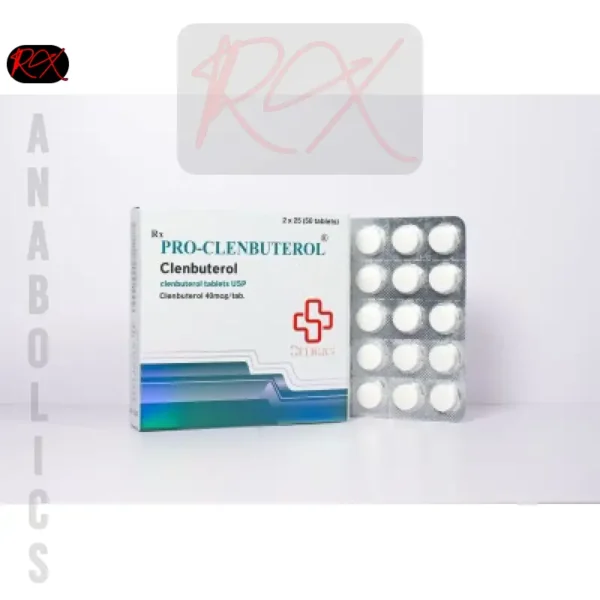
Pro-Clenbuterol 40mcg (Clenbuterol Hydrochloride) 50 Tablets | iRoids Pharma
Pro-Clenbuterol 40mcg is an oral beta-2 adrenergic agonist containing 40mcg of Clenbuterol Hydrochloride per tablet, available in packs of 50 tablets. At iRoids Pharma, we carry Pro-Clenbuterol 40mcg as part of our ancillary and metabolic compound inventory for customers in markets where Clenbuterol is legally available.
Clenbuterol Hydrochloride is the active compound in this preparation. Pro-Clenbuterol is the brand designation under which this specific Clenbuterol preparation is marketed at iRoids Pharma. The compound is widely recognized under the generic name Clenbuterol and the brand name Spiropent in veterinary and international pharmaceutical markets. Clenbuterol occupies a distinct pharmacological position among metabolic and thermogenic compounds discussed in performance communities due to its selective beta-2 adrenergic receptor agonism, which produces both bronchodilatory and thermogenic effects through adrenergic signaling mechanisms that are fundamentally different from thyroid hormone-mediated thermogenesis.
The 40mcg tablet format of this preparation aligns with the most widely recognized and historically standard concentration for Clenbuterol in non-prescription markets and is the concentration at which the majority of Clenbuterol performance community discussions are referenced. This page covers the pharmacology, brand-specific context, concentration-specific considerations, and health and legal context relevant to anyone researching Clenbuterol at iRoids Pharma. It does not constitute medical advice, recommend use outside of legitimate medical supervision, or provide dosage guidance of any kind.
Product Specifications
| Specification | Details |
|---|---|
| Product Name | Pro-Clenbuterol 40mcg |
| Brand | Pro-Clenbuterol |
| Website | iroidspharma.com |
| Active Compound | Clenbuterol Hydrochloride |
| Also Known As | Clenbuterol, Clen, Spiropent, Dilaterol |
| Drug Class | Beta-2 adrenergic agonist, sympathomimetic amine |
| Concentration | 40mcg per tablet |
| Pack Size | 50 tablets |
| Total Active Compound Per Pack | 2000mcg |
| Presentation | Oral tablet |
| Form | Tablet |
| Half-Life | Approximately 36 to 48 hours |
| Route of Administration | Oral |
| Mechanism of Action | Selective beta-2 adrenergic receptor agonism producing bronchodilation and thermogenesis |
| Primary Effects | Bronchodilation, thermogenesis, lipolysis, mild anabolic activity |
| FDA Approval | Not approved for human use in the United States. Approved for veterinary use. |
| Legal Status | Not scheduled as a controlled substance in the United States but not approved for human use. Legal and prescription status varies significantly by country. |
| Availability | iroidspharma.com |
About the Pro-Clenbuterol Brand
Pro-Clenbuterol is a non-prescription Clenbuterol preparation marketed under a distinct brand identity within the iRoids Pharma product catalog. The Pro-Clenbuterol brand designation identifies this specific preparation as distinct from other Clenbuterol products in the non-prescription market while containing the same active Clenbuterol Hydrochloride compound whose pharmacological effects are referenced throughout available literature under the Clenbuterol generic name.
Buyers researching Pro-Clenbuterol will find the pharmacological literature for this compound referenced under the Clenbuterol generic name and the Spiropent brand name rather than under the Pro-Clenbuterol brand designation specifically. The pharmacological profile described throughout this page applies to Clenbuterol Hydrochloride as an active compound regardless of the specific brand designation. Pro-Clenbuterol at iRoids Pharma consequently carries the same pharmacological mechanisms, available research background, and health and legal considerations as any other 40mcg Clenbuterol preparation.
What Makes Clenbuterol Pharmacologically Distinct
Clenbuterol occupies a specific and distinctive position among thermogenic and metabolic compounds discussed in performance communities. Understanding this position requires examining how its beta-2 adrenergic agonism mechanism differs from thyroid hormone-mediated thermogenesis and from anabolic steroid-mediated body composition effects.
Unlike Liothyronine, which elevates metabolic rate through thyroid hormone receptor-mediated changes in cellular gene expression programs, Clenbuterol produces thermogenesis through direct stimulation of beta-2 adrenergic receptors in adipose tissue, skeletal muscle, and the sympathetic nervous system. These two thermogenic mechanisms are consequently pharmacologically distinct and operate through completely different signaling pathways. Liothyronine acts through nuclear receptor-mediated genomic mechanisms. Clenbuterol acts through G-protein coupled receptor-mediated intracellular signaling cascades. Their combined effects in performance community discussions consequently reflect additive thermogenic contributions from two distinct mechanistic pathways.
Unlike oral anabolic steroids discussed at iRoids Pharma, Clenbuterol does not operate through androgen receptor binding and does not produce anabolic effects through the same receptor-mediated gene transcription programs. Its mild anabolic activity, observed in animal studies and some human research, appears to be mediated through distinct beta-2 receptor-mediated pathways in muscle tissue rather than through conventional androgen receptor activation. This mechanistic distinction means Clenbuterol’s body composition effects operate through pharmacological pathways that no anabolic steroid replicates.
What Is Clenbuterol
Clenbuterol Hydrochloride is a synthetic sympathomimetic amine developed originally as a bronchodilator for the treatment of asthma and other obstructive airway conditions. It was approved in several international markets for human bronchodilatory use under the Spiropent brand name and related designations. In the United States, Clenbuterol is approved exclusively for veterinary use as a bronchodilator in horses but has never received FDA approval for human use.
Structurally, Clenbuterol is a substituted phenylaminoethanol derivative sharing structural features with other sympathomimetic amines including ephedrine and salbutamol. Its chemical structure confers selective affinity for beta-2 adrenergic receptors over beta-1 receptors, producing bronchodilatory effects primarily in bronchial smooth muscle while minimizing the cardiac effects associated with less selective beta-adrenergic agonists. This beta-2 selectivity is the pharmacological basis for its bronchodilatory clinical applications and its separation from non-selective sympathomimetic compounds with more pronounced cardiovascular side effects.
The compound is available in oral, injectable, and inhaled formulations in various international markets. The oral tablet formulation is by far the most commonly discussed format in performance communities and is the formulation contained in the iRoids Pharma Pro-Clenbuterol preparation.
How Clenbuterol Works
Clenbuterol interacts with the adrenergic receptor system through selective beta-2 receptor agonism that produces several distinct downstream pharmacological effects simultaneously.
Beta-2 Adrenergic Receptor Activation
Beta-2 adrenergic receptors are G-protein coupled receptors expressed throughout the body in bronchial smooth muscle, vascular smooth muscle, adipose tissue, skeletal muscle, cardiac tissue, and the central nervous system. Clenbuterol binds to these receptors with high selectivity relative to beta-1 adrenergic receptors, activating adenylyl cyclase through Gs protein coupling. This activation produces intracellular cyclic AMP elevation, which activates protein kinase A and drives downstream cellular responses specific to each tissue type expressing beta-2 receptors.
Bronchodilation
In bronchial smooth muscle, beta-2 receptor activation produces smooth muscle relaxation and bronchodilation through cyclic AMP-mediated reduction of intracellular calcium. This bronchodilatory mechanism is the clinical basis for Clenbuterol’s approved veterinary and international human pharmaceutical applications. The bronchodilatory effect at the 40mcg concentration is the most directly documented pharmacological effect of Clenbuterol at this standard oral tablet concentration.
Thermogenesis and Metabolic Rate Elevation
In adipose tissue and skeletal muscle, beta-2 receptor activation stimulates thermogenesis through upregulation of uncoupling protein expression and enhancement of mitochondrial heat production. This thermogenic mechanism elevates basal metabolic rate in a dose-dependent manner. Unlike thyroid hormone-mediated thermogenesis which operates through nuclear receptor genomic mechanisms, Clenbuterol’s thermogenic effect operates through G-protein coupled receptor signaling cascades. At the 40mcg concentration, this thermogenic effect is the most consistently discussed pharmacological characteristic of Clenbuterol in performance community literature.
Lipolysis
Beta-2 receptor activation in adipose tissue stimulates hormone-sensitive lipase activity through cyclic AMP-mediated signaling, enhancing the breakdown of stored triglycerides into free fatty acids and glycerol for energy utilization. This lipolytic mechanism is directly relevant to Clenbuterol’s body composition effects and complements its thermogenic mechanism by both mobilizing stored fat and increasing the metabolic rate at which mobilized fatty acids are oxidized. Together, thermogenesis and lipolysis produce the body composition effects that drive the majority of Clenbuterol discussion in performance communities.
Mild Anabolic Activity in Muscle Tissue
Clenbuterol produces mild anabolic and anti-catabolic effects in skeletal muscle tissue through beta-2 receptor-mediated mechanisms. Animal studies consistently document increases in muscle protein synthesis and reductions in protein degradation from Clenbuterol administration. Human research is less conclusive regarding the magnitude of these effects at oral doses used in performance contexts. However, the mechanistic basis for some degree of beta-2 receptor-mediated anabolic activity in human skeletal muscle is documented in research literature and represents a pharmacological characteristic that distinguishes Clenbuterol from purely lipolytic thermogenic compounds with no anabolic mechanism.
Beta-2 Receptor Downregulation
Continuous beta-2 adrenergic receptor stimulation produces receptor downregulation through internalization and reduced cell surface expression. This downregulation mechanism is directly relevant to Clenbuterol’s practical pharmacological profile because it produces tolerance to the compound’s effects with continuous use. Consequently, the thermogenic, lipolytic, and adrenergic side effects of Clenbuterol diminish with continuous daily use as receptor expression decreases. This tolerance development drives the cycling protocols commonly discussed in performance communities as a practical management approach to maintaining Clenbuterol’s pharmacological activity over extended periods.
The 40mcg Concentration and 50 Tablet Pack Context
Standard Non-Prescription Reference Concentration
The 40mcg per tablet concentration represents the most widely recognized and historically standard concentration for oral Clenbuterol in non-prescription markets globally. Unlike the variation seen in anabolic steroid tablet concentrations where the same compound is commonly available across several distinct concentrations, Clenbuterol oral tablets are most consistently discussed and referenced at the 40mcg per tablet concentration in performance community literature. The 40mcg format consequently represents the primary concentration at which the available observational data and performance community pharmacological discussions for this compound were accumulated.
Relationship to Human Pharmaceutical Reference Formats
International human pharmaceutical Clenbuterol preparations including Spiropent were historically available at 20mcg per tablet in several markets. The 40mcg concentration of Pro-Clenbuterol consequently delivers double the active compound per tablet compared to the historical international pharmaceutical reference format. Every dose-dependent pharmacological effect including thermogenesis, lipolysis, bronchodilation, cardiovascular stimulation, and side effect profile is consequently twice as pronounced per tablet at the 40mcg concentration as at the 20mcg historical pharmaceutical reference format.
50 Tablet Pack
Each Pro-Clenbuterol pack contains 50 tablets at 40mcg per tablet, providing a total of 2000mcg of active Clenbuterol Hydrochloride per pack. This pack size provides a substantial supply for customers researching this compound in markets where Clenbuterol is legally available. The beta-2 receptor downregulation tolerance consideration is directly relevant to understanding the practical utility of the 50 tablet pack supply, as continuous daily use at a fixed dose produces diminishing pharmacological effects as receptor downregulation progresses.
Clenbuterol Versus Other Thermogenic and Metabolic Compounds at iRoids Pharma
Versus Liothyronine 25mcg
Liothyronine is a synthetic thyroid hormone producing thermogenesis through nuclear thyroid hormone receptor-mediated genomic mechanisms. Clenbuterol produces thermogenesis through beta-2 adrenergic receptor-mediated non-genomic signaling cascades. These two thermogenic mechanisms are consequently pharmacologically distinct and operate through completely different molecular pathways. Liothyronine’s thermogenic effect does not develop tolerance through receptor downregulation in the same manner as Clenbuterol’s adrenergic mechanism. Clenbuterol’s thermogenesis develops tolerance with continuous use due to beta-2 receptor downregulation. Liothyronine carries muscle catabolism risk at supraphysiological concentrations. Clenbuterol carries mild anabolic and anti-catabolic activity in skeletal muscle tissue through its beta-2 receptor mechanism.
Versus Liothyronine 40mcg
Both compounds produce thermogenic effects through different mechanisms. Liothyronine 40mcg exceeds the standard pharmaceutical clinical tablet format by 60 percent and carries more pronounced cardiovascular stimulation and muscle catabolism considerations than the standard 25mcg format. Clenbuterol 40mcg represents the standard non-prescription market concentration and produces thermogenesis through adrenergic rather than thyroid hormone receptor mechanisms. The cardiovascular stimulatory profiles of these two compounds differ in character. Liothyronine produces cardiac effects through thyroid hormone receptor activation in cardiac tissue. Clenbuterol produces cardiac effects through beta-adrenergic receptor activation. These distinct cardiovascular mechanisms produce different practical monitoring considerations.
Versus Anastrozole 1mg
Anastrozole is a dedicated aromatase inhibitor with no thermogenic, lipolytic, or adrenergic activity. Pro-Clenbuterol produces thermogenesis and lipolysis through beta-2 adrenergic agonism with no aromatase inhibitory activity. These two compounds serve completely different pharmacological roles within the iRoids Pharma catalog and share no meaningful pharmacological overlap.
Versus Winstrol 10mg
Winstrol 10mg is an oral anabolic steroid producing anabolic effects through androgen receptor-mediated mechanisms with significant hepatotoxicity. Pro-Clenbuterol produces mild anabolic and thermogenic effects through beta-2 adrenergic receptor mechanisms with no hepatotoxicity from 17-alpha alkylation. These two compounds operate through fundamentally different pharmacological mechanisms. Winstrol produces pronounced androgen receptor-mediated anabolic effects with significant liver stress. Clenbuterol produces mild beta-2 receptor-mediated anabolic effects without hepatotoxic considerations. These mechanistic and risk profile distinctions place them in completely different pharmacological categories.
Side Effects and Health Risks
Pro-Clenbuterol 40mcg carries a well-documented side effect profile based on the available international pharmaceutical literature and extensive observational data from non-prescription use. These risks require responsible attention regardless of the brand designation under which the compound is marketed.
Cardiovascular Effects
Cardiovascular side effects represent the most clinically significant health considerations associated with Clenbuterol use at any concentration. Beta-2 adrenergic receptor activation produces cardiac stimulatory effects including increased heart rate, palpitations, and elevated blood pressure. While Clenbuterol’s beta-2 selectivity reduces cardiac effects compared to non-selective beta-adrenergic agonists, meaningful cardiovascular stimulation occurs at the 40mcg concentration due to some degree of beta-1 receptor activation and indirect sympathomimetic cardiovascular effects. Anyone with pre-existing cardiovascular conditions should not use Clenbuterol at any concentration without direct physician supervision. Regular cardiovascular monitoring including heart rate and blood pressure assessment is essential for anyone using Pro-Clenbuterol.
Tremor
Skeletal muscle tremor is among the most consistently reported side effects of Clenbuterol use and is a direct consequence of beta-2 adrenergic receptor activation in skeletal muscle. Tremor is dose-dependent and more pronounced at the 40mcg concentration than at the 20mcg historical pharmaceutical reference format. It is generally most pronounced during the initial period of use before some degree of receptor tolerance develops.
Insomnia
Clenbuterol’s sympathomimetic activity produces central nervous system stimulation that interferes with sleep in a dose-dependent manner. Insomnia is among the most consistently reported practical side effects of Clenbuterol use in both pharmaceutical literature and observational data. The extended half-life of approximately 36 to 48 hours means that daytime administration can produce sympathomimetic stimulation extending into sleep periods. Insomnia considerations are consequently more practically significant with Clenbuterol than with shorter-acting sympathomimetics.
Headache
Headache from vasodilatory effects and sympathomimetic central nervous system stimulation is consistently reported in Clenbuterol use. This effect is dose-dependent and more pronounced at the 40mcg concentration than at lower formats. It is generally more prominent during the initial period of use.
Muscle Cramps
Muscle cramping is a practically significant and consistently reported side effect of Clenbuterol use that distinguishes it from most other compounds discussed in performance communities. The mechanism involves Clenbuterol-induced depletion of taurine and potassium in muscle tissue through beta-2 receptor-mediated mechanisms. Adequate hydration and electrolyte supplementation are consistently referenced in performance community discussions as practical management approaches for this specific side effect.
Beta-2 Receptor Desensitization and Tolerance
Continuous beta-2 receptor stimulation from Clenbuterol use produces receptor downregulation that diminishes its pharmacological effects over time. This tolerance development is one of the most pharmacologically distinctive practical characteristics of Clenbuterol compared to most other compounds discussed in performance communities. The thermogenic, lipolytic, and adrenergic effects of Clenbuterol consequently diminish with continuous daily use as receptor downregulation progresses. This tolerance mechanism drives the cycling approaches discussed in performance communities for managing Clenbuterol’s practical pharmacological activity over extended research periods.
Electrolyte Disturbances
Beta-2 adrenergic receptor activation drives intracellular potassium shift and can produce hypokalemia with significant Clenbuterol exposure. This electrolyte disturbance is directly related to the muscle cramping side effect and carries its own cardiovascular implications given potassium’s role in cardiac electrical activity. Regular electrolyte monitoring is consequently a relevant health consideration for anyone using Pro-Clenbuterol at the 40mcg concentration.
Sweating and Heat Intolerance
The thermogenic effects of Clenbuterol produce increased sweating and heat intolerance that are dose-dependent and reflect the compound’s elevation of basal metabolic rate through beta-2 adrenergic mechanisms. These effects are consistent with the thermogenic mechanism and are proportionally more pronounced at the 40mcg concentration than at lower formats.
Legal and Regulatory Status
Clenbuterol does not carry Schedule III controlled substance status in the United States in the way that anabolic steroids do. However, it is not approved for human use in the United States and its use in food-producing animals is prohibited due to concerns about residues in meat products. Obtaining Clenbuterol for human use consequently operates in a distinct legal framework from controlled substances but remains outside the bounds of approved human pharmaceutical use in the United States.
In the United Kingdom, Clenbuterol is a prescription-only medication under the Medicines Act for human use and a veterinary prescription medication for animal use.
In several European and Latin American countries, Clenbuterol has been approved as a human pharmaceutical bronchodilator and is available through prescription channels.
The World Anti-Doping Agency bans Clenbuterol across all competitive sport categories as a beta-2 agonist. It has been involved in several high-profile doping cases due to contaminated meat consumption in some jurisdictions. You are responsible for confirming the regulatory status in your specific sporting context if applicable.
You are responsible for confirming the legal status of Clenbuterol in your specific jurisdiction before purchasing from iRoids Pharma.
Frequently Asked Questions
Is Pro-Clenbuterol 40mcg Available at iRoids Pharma
Yes. iRoids Pharma carries Pro-Clenbuterol 40mcg in packs of 50 tablets for customers in markets where Clenbuterol is legally available. Visit iroidspharma.com to check current availability and pricing.
What Is the Half-Life of Clenbuterol
Clenbuterol produces a half-life of approximately 36 to 48 hours. This extended half-life is one of the most practically significant pharmacokinetic characteristics of this compound. It produces prolonged adrenergic stimulation following each dose and means that plasma concentrations accumulate gradually following initiation of daily use. The extended half-life also means that sympathomimetic side effects including insomnia and cardiovascular stimulation persist for extended periods following each dose.
How Many Tablets Are in Each Pro-Clenbuterol Pack
Each iRoids Pharma Pro-Clenbuterol pack contains 50 tablets at 40mcg per tablet, providing a total of 2000mcg of active Clenbuterol Hydrochloride per pack.
How Does Clenbuterol’s Thermogenic Mechanism Differ From Liothyronine
Clenbuterol produces thermogenesis through beta-2 adrenergic receptor-mediated activation of adenylyl cyclase and cyclic AMP signaling in adipose tissue and skeletal muscle. Liothyronine produces thermogenesis through thyroid hormone receptor-mediated genomic mechanisms in cell nuclei throughout the body. These two thermogenic pathways operate through completely different molecular mechanisms and consequently produce different practical pharmacological profiles including different tolerance development patterns, different side effect profiles, and different interactions with muscle tissue protein metabolism.
Why Does Clenbuterol Cause Muscle Cramps
Muscle cramping from Clenbuterol use is associated with beta-2 receptor-mediated depletion of taurine and potassium in muscle tissue. Taurine plays a role in regulating intracellular calcium levels in muscle cells and its depletion from Clenbuterol use consequently disrupts normal muscle contraction and relaxation cycles. Adequate hydration and electrolyte management are consistently referenced in performance community discussions as practical approaches to managing this specific side effect.
Does Clenbuterol Develop Tolerance With Continuous Use
Yes. Continuous beta-2 adrenergic receptor stimulation from Clenbuterol use produces receptor downregulation through internalization and reduced cell surface expression. This downregulation diminishes the thermogenic, lipolytic, and adrenergic effects of Clenbuterol with continuous use. The tolerance development mechanism is a distinctive pharmacological characteristic of Clenbuterol that drives cycling discussions in performance communities as a practical approach to managing this compound’s pharmacological activity over extended periods.
Is Clenbuterol an Anabolic Steroid
No. Clenbuterol is a beta-2 adrenergic agonist and sympathomimetic amine. It does not operate through androgen receptor binding and does not produce anabolic effects through the androgen receptor-mediated gene transcription programs that define anabolic steroid pharmacology. Its mild anabolic and anti-catabolic activity in skeletal muscle is mediated through beta-2 receptor mechanisms that are pharmacologically distinct from androgen receptor-mediated anabolic steroid effects.
What Are the Most Serious Health Risks
Cardiovascular effects including tachycardia, palpitations, and elevated blood pressure are the most clinically significant health concerns with Clenbuterol use. Electrolyte disturbances including hypokalemia from beta-2 receptor-mediated potassium shift carry cardiovascular implications. Tremor, insomnia, muscle cramping, and headache complete the primary side effect profile. Regular cardiovascular monitoring and electrolyte monitoring are consequently essential for anyone using Pro-Clenbuterol at any concentration. Medical supervision is strongly recommended.
Is Pro-Clenbuterol 40mcg Legal to Purchase
Clenbuterol is not approved for human use in the United States and is not scheduled as a controlled substance in the same manner as anabolic steroids. Legal and prescription status varies significantly by jurisdiction. You are consequently responsible for confirming the legal status in your jurisdiction before purchasing from iRoids Pharma.
What to Consider Before Purchasing Pro-Clenbuterol 40mcg
Clenbuterol carries a pharmacological profile documented through its approved veterinary and international human pharmaceutical applications alongside extensive observational data from non-prescription use. Unlike most oral anabolic steroids at iRoids Pharma, Clenbuterol operates through a completely distinct beta-2 adrenergic agonism mechanism that produces thermogenic, lipolytic, bronchodilatory, and mild anabolic effects through pathways that no anabolic steroid replicates.
The 40mcg format of Pro-Clenbuterol represents the standard non-prescription market concentration for this compound and aligns with the concentration at which the majority of performance community observational data was accumulated. It delivers double the active compound per tablet compared to the historical 20mcg international pharmaceutical reference format. The 50 tablet pack provides a total of 2000mcg of active Clenbuterol Hydrochloride. The beta-2 receptor downregulation tolerance mechanism is directly relevant to understanding the practical pharmacological utility of this pack supply over extended research periods.
The iRoids Pharma non-prescription preparation does not carry the manufacturing oversight of international pharmaceutical grade Clenbuterol preparations. Manufacturing standards and quality verification consequently differ from pharmaceutical grade preparations. The absence of FDA approval for human use means there is no domestic pharmaceutical grade comparator for this compound in the United States context.
Clenbuterol carries documented cardiovascular, electrolyte, tremor, insomnia, muscle cramping, and tolerance-related health and practical considerations. The extended half-life of 36 to 48 hours amplifies the duration and accumulation of these side effects compared to shorter-acting sympathomimetics. Medical supervision and regular cardiovascular and electrolyte monitoring are consequently essential for anyone researching this compound.
For customers in markets where Clenbuterol is legally available, visit iroidspharma.com to check current Pro-Clenbuterol 40mcg availability, pricing, and stock levels.
Reviews
There are no reviews yet.
Related products
ORAL STEROIDS
ORAL STEROIDS
ORAL STEROIDS
ORAL STEROIDS
ORAL STEROIDS
ORAL STEROIDS
ORAL STEROIDS
ORAL STEROIDS
Be the first to review “Pro-Clenbuterol 40mcg 50tabs”