
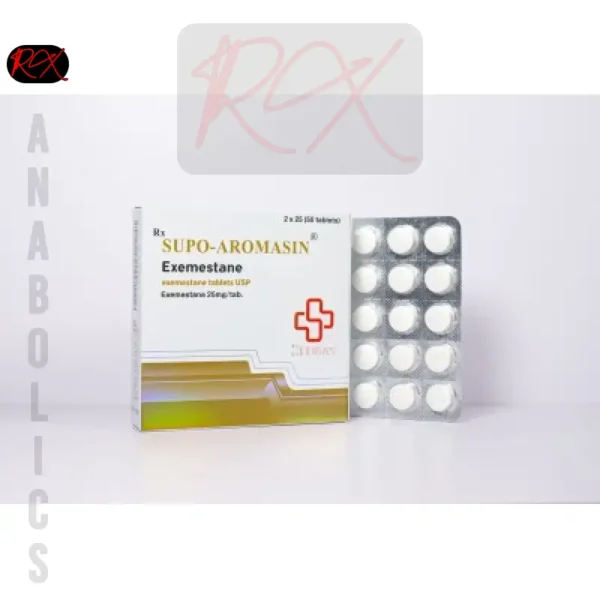
Supo-Aromasin 25mg (Exemestane) 50 Tablets | iRoids Pharma
Supo-Aromasin 25mg is an oral aromatase inhibitor containing 25mg of Exemestane per tablet, available in packs of 50 tablets. At iRoids Pharma, we carry Supo-Aromasin 25mg as part of our ancillary and anti-estrogenic compound inventory for customers in markets where Exemestane is legally available.
Exemestane is the active compound in this preparation. Supo-Aromasin is the brand designation under which this specific Exemestane preparation is marketed at iRoids Pharma. The pharmacological profile, clinical background, and health considerations applicable to Exemestane and pharmaceutical grade Aromasin by Pfizer apply directly and completely to this preparation given the 25mg concentration’s alignment with the only standard pharmaceutical clinical tablet format for Exemestane.
This page covers the pharmacology, brand-specific context, and health and legal considerations relevant to anyone researching Supo-Aromasin at iRoids Pharma. It does not constitute medical advice, recommend steroid use, or provide dosage, cycle, or stacking guidance of any kind.
Product Specifications
| Specification | Details |
|---|---|
| Product Name | Supo-Aromasin 25mg |
| Brand | Supo-Aromasin |
| Website | iroidspharma.com |
| Active Compound | Exemestane |
| Also Known As | Aromasin, Exemestane, Steroidal AI |
| Drug Class | Aromatase inhibitor, Type I steroidal aromatase inactivator, third-generation AI |
| Concentration | 25mg per tablet |
| Pack Size | 50 tablets |
| Total Active Compound Per Pack | 1250mg |
| Presentation | Oral tablet |
| Form | Tablet |
| Half-Life | Approximately 24 hours |
| Route of Administration | Oral |
| Mechanism of Action | Irreversible steroidal aromatase inactivation |
| Estrogen Suppression | Approximately 85 percent reduction in estrogen levels at standard clinical doses |
| Androgenic Activity | Mild, from steroidal androstenedione-derived structure |
| Aromatase Binding | Irreversible, permanent covalent inactivation |
| FDA Approval | Yes. Approved for breast cancer treatment in postmenopausal women. |
| Legal Status | Prescription only in the United States. Legal status varies by country. |
| Availability | iroidspharma.com |
About the Supo-Aromasin Brand
Supo-Aromasin is a non-prescription Exemestane preparation marketed under a distinct brand identity within the iRoids Pharma product catalog. The Supo-Aromasin brand designation identifies this specific preparation as distinct from other Exemestane products available in the non-prescription market while containing the same active Exemestane compound at the same 25mg per tablet concentration as pharmaceutical grade Aromasin by Pfizer.
The brand name Supo-Aromasin reflects a naming convention used across several compounds in the non-prescription performance market where brand identifiers distinguish manufacturer-specific preparations containing the same active pharmaceutical ingredients as established clinical reference products. Understanding this context is relevant because buyers researching Supo-Aromasin will find the pharmacological literature for this compound referenced under the Exemestane generic name and the Aromasin brand name rather than under the Supo-Aromasin brand designation specifically.
The pharmacological profile described throughout this page applies to Exemestane as an active compound regardless of the specific brand designation under which it is marketed. The Supo-Aromasin preparation at iRoids Pharma consequently carries the same pharmacological mechanisms, clinical reference background, and health and legal considerations as any other 25mg Exemestane preparation.
What Distinguishes Supo-Aromasin From the Generic Exemestane Page at iRoids Pharma
iRoids Pharma carries Exemestane at 25mg per tablet under both the generic Exemestane listing and the Supo-Aromasin brand listing. Both preparations contain Exemestane as the sole active compound at identical concentrations. The primary distinction between the two listings is the specific manufacturer and brand identity of the preparation rather than any pharmacological difference in the active compound.
Buyers who have researched our generic Exemestane 25mg page will consequently find identical pharmacological information on this page because the active compound, concentration, mechanism of action, clinical reference background, and side effect profile are identical between the two preparations. The Supo-Aromasin brand identity at iRoids Pharma reflects a specific manufacturer-labeled preparation rather than a pharmacologically distinct product.
What Is Exemestane
Exemestane is a synthetic steroidal compound derived from androstenedione and belongs to the third generation of aromatase inhibitors. Pharmacia developed it and it received FDA approval under the Aromasin brand name for the treatment of breast cancer in postmenopausal women. Its steroidal structure derived from the natural aromatase substrate androstenedione is the foundation of its mechanistic distinction from non-steroidal aromatase inhibitors including Anastrozole and Letrozole.
Structurally, Exemestane is a 6-methyleneandrosta-1,4-diene-3,17-dione derivative. This steroidal scaffold allows it to bind to the aromatase enzyme’s active site as a pseudosubstrate, mimicking the natural substrate androstenedione. Following binding, the catalytic mechanism of the aromatase enzyme activates Exemestane into a reactive intermediate that forms a permanent covalent bond with the enzyme’s active site. This permanently inactivates that enzyme molecule through a mechanism designated irreversible aromatase inactivation or suicide inhibition.
Unlike non-steroidal aromatase inhibitors including Anastrozole and Letrozole, Exemestane’s steroidal structure produces mild androgenic activity as a secondary pharmacological characteristic. This mild androgenic activity is one of the most consistently discussed pharmacological distinctions between steroidal and non-steroidal aromatase inhibitors and contributes to specific discussions about bone density and androgen receptor effects that non-steroidal alternatives do not generate.
How Exemestane Works
Exemestane interacts with the aromatase enzyme system through a series of pharmacological steps that produce its characteristic irreversible inhibition of estrogen biosynthesis.
Suicide Inhibition Mechanism
Exemestane binds to the active site of the aromatase enzyme with high affinity, competing effectively with the natural substrate androstenedione. Following binding, the catalytic machinery of the aromatase enzyme processes Exemestane as if it were its natural substrate. This catalytic processing generates a reactive intermediate that forms a permanent covalent bond with a critical residue in the enzyme’s active site, rendering that enzyme molecule permanently inactive.
This permanent covalent inactivation is irreversible and fundamentally different in kind from the competitive inhibition produced by non-steroidal aromatase inhibitors. Non-steroidal inhibitors including Anastrozole simply occupy the enzyme active site without permanently destroying enzyme function. Consequently, restoration of full aromatase activity following Exemestane cessation requires new enzyme synthesis rather than simple dissociation of the inhibitor as with reversible alternatives.
Estrogen Biosynthesis Suppression
The permanent inactivation of aromatase enzyme molecules by Exemestane reduces the total functional aromatase pool available for estrogen biosynthesis. At the standard clinical dose of 25mg, Exemestane suppresses plasma estrogen levels by approximately 85 percent in postmenopausal women in the breast cancer treatment clinical trials that established its pharmacological profile. This degree of suppression reflects the cumulative effect of irreversible aromatase inactivation across the functional aromatase enzyme pool in peripheral tissues.
Mild Androgenic Receptor Activation
Exemestane’s steroidal structure produces mild binding to androgen receptors in addition to its primary aromatase inhibition mechanism. This mild androgenic receptor activation is a secondary pharmacological characteristic rather than a primary mechanism of action. It produces a mild androgenic contribution that is absent in non-steroidal aromatase inhibitors and consequently contributes to the pharmacological distinctions between steroidal and non-steroidal AI options in compound selection discussions.
Recovery of Estrogen Following Cessation
Because Exemestane permanently inactivates rather than reversibly inhibits aromatase enzyme molecules, estrogen levels following cessation recover only as new aromatase enzyme is synthesized. This recovery process is consequently slower than the recovery from cessation of reversible aromatase inhibitors including Anastrozole, where dissociation of the inhibitor from previously bound enzyme molecules allows rapid resumption of aromatase activity. The time course of estrogen recovery following Supo-Aromasin cessation is consequently a relevant pharmacokinetic consideration that distinguishes it from non-steroidal alternatives.
Clinical Background
Exemestane carries an extensively documented clinical history across its FDA-approved breast cancer indications. This clinical documentation is among the most comprehensive for any aromatase inhibitor discussed in performance communities.
FDA Approval for Breast Cancer Treatment
The FDA approved Exemestane for the treatment of advanced breast cancer in postmenopausal women whose disease progressed following antiestrogen therapy. Subsequently its approval expanded to include adjuvant treatment of early breast cancer in postmenopausal women following two to three years of Tamoxifen therapy. These approvals reflect extensive Phase III clinical trial data documenting Exemestane’s efficacy and safety profile in oncological applications.
Comparison With Non-Steroidal Aromatase Inhibitors
Multiple clinical trials have compared Exemestane directly with Anastrozole and Letrozole in breast cancer treatment settings. These comparative trials provide a directly relevant pharmacological reference for understanding the practical similarities and differences between steroidal and non-steroidal aromatase inhibitors. This comparative clinical literature is particularly relevant for anyone researching aromatase inhibitor selection from an evidence-based standpoint.
Bone Density Research
Clinical research on long-term aromatase inhibitor use has documented and compared bone density effects across different aromatase inhibitor classes. Research has examined whether Exemestane’s mild androgenic activity produces any offset to the bone density loss associated with profound estrogen suppression compared to non-steroidal alternatives. This body of research provides a clinically relevant context for understanding one of the most discussed distinctions between steroidal and non-steroidal aromatase inhibitors.
Supo-Aromasin Versus Other Anti-Estrogenic Compounds at iRoids Pharma
Versus Anastrozole 1mg
Anastrozole is a non-steroidal Type II aromatase inhibitor producing approximately 70 to 80 percent estrogen suppression through reversible competitive binding with no androgenic activity. Supo-Aromasin contains Exemestane, a steroidal Type I aromatase inactivator producing approximately 85 percent estrogen suppression through irreversible covalent inactivation with mild androgenic activity. Exemestane consequently produces modestly greater estrogen suppression. Recovery of aromatase activity following Exemestane cessation requires new enzyme synthesis rather than the rapid inhibitor dissociation that characterizes Anastrozole cessation. These mechanistic and structural distinctions make these two compounds pharmacologically distinct despite both being third-generation aromatase inhibitors with similar clinical applications.
Versus Tamoxifen
Tamoxifen is a selective estrogen receptor modulator that blocks estrogen receptor activation without reducing circulating estrogen levels. Supo-Aromasin reduces circulating estrogen levels through irreversible aromatase inactivation without directly blocking estrogen receptors. These mechanistically opposite approaches produce different downstream pharmacological effects and different practical applications. Supo-Aromasin and Tamoxifen are consequently pharmacologically complementary rather than directly interchangeable.
Versus Mesterolone 25mg
Mesterolone 25mg produces mild aromatase inhibition as one component of its multi-mechanism profile alongside SHBG binding and moderate androgenic activity. Supo-Aromasin is a dedicated third-generation aromatase inhibitor producing approximately 85 percent estrogen suppression as its primary mechanism. The degree of aromatase inhibition from Supo-Aromasin is consequently vastly more potent than the mild inhibitory contribution from Mesterolone. These two compounds serve fundamentally different primary pharmacological roles in anti-estrogenic compound discussions at iRoids Pharma.
Versus Winstrol 10mg
Winstrol 10mg is an anabolic-androgenic steroid with significant hepatotoxicity, no anti-estrogenic properties, and a primary role in performance-related discussions rather than estrogen management. Supo-Aromasin is a dedicated aromatase inhibitor with no significant anabolic activity, low hepatotoxicity compared to alkylated oral steroids, and a primary role in estrogen management discussions. These two compounds serve completely different pharmacological roles within the iRoids Pharma catalog and share no meaningful pharmacological overlap.
Side Effects and Health Risks
Supo-Aromasin 25mg carries the well-documented side effect profile of Exemestane at the standard 25mg clinical dose. These risks require responsible attention regardless of the brand designation under which the compound is marketed.
Estrogen Deficiency Effects
The most significant side effects are direct consequences of approximately 85 percent estrogen suppression at the 25mg clinical dose. Estrogen serves important physiological functions in both men and women including maintenance of bone mineral density, cardiovascular health, lipid metabolism, sexual function, joint health, and mood regulation. Suppressing estrogen to approximately 15 percent of baseline levels consequently affects all of these estrogen-dependent physiological functions simultaneously.
In men using Supo-Aromasin in non-clinical contexts, excessive estrogen suppression produces symptoms including joint pain, decreased libido, erectile dysfunction, mood disturbances, and fatigue. These estrogen deficiency symptoms reflect the physiological consequences of reducing estrogen below the level required for normal male physiological function. Managing the degree of estrogen suppression to avoid over-suppression below physiological requirements is consequently one of the most important practical considerations associated with Exemestane use in male non-clinical contexts.
Bone Density
Profound estrogen suppression from Exemestane use is associated with accelerated bone turnover and reduction in bone mineral density with sustained use. This is a class effect documented across all third-generation aromatase inhibitors. Exemestane’s mild androgenic activity may partially offset this effect compared to non-steroidal alternatives according to some clinical research. However, bone density monitoring remains a relevant health consideration for anyone using Supo-Aromasin at the standard 25mg clinical dose over extended periods.
Cardiovascular and Lipid Effects
Profound estrogen suppression affects lipid metabolism and cardiovascular risk parameters through the loss of estrogen’s cardioprotective effects. HDL cholesterol reduction and unfavorable lipid profile changes are documented in the breast cancer clinical trial literature on aromatase inhibitor use. These cardiovascular considerations require active monitoring for anyone using Supo-Aromasin in any context.
Joint and Musculoskeletal Effects
Joint pain, stiffness, and musculoskeletal discomfort are among the most consistently reported side effects in the aromatase inhibitor clinical trial literature and represent a class effect across third-generation aromatase inhibitors. These musculoskeletal effects are directly related to estrogen deficiency consequences on joint tissue health.
Androgenic Effects
Exemestane’s mild androgenic activity from its steroidal structure can produce mild androgenic effects in susceptible individuals. These effects are considerably less pronounced than those associated with dedicated androgenic compounds but represent a pharmacological contribution that non-steroidal aromatase inhibitors do not carry.
Slower Estrogen Recovery Following Cessation
Unlike reversible aromatase inhibitors including Anastrozole, Supo-Aromasin’s irreversible inactivation mechanism means estrogen levels following dose reduction or cessation recover more slowly. New aromatase enzyme synthesis is required to restore aromatase activity. This slower recovery characteristic makes hormonal monitoring and dose management more critical with Supo-Aromasin than with reversible alternatives.
Legal and Regulatory Status
Exemestane is a prescription-only medication in the United States. The FDA approved it under the Aromasin brand name for specific breast cancer indications. Obtaining Exemestane without a valid prescription is a legal offense in the United States and most developed countries.
In the United Kingdom, Exemestane is a prescription-only medication under the Medicines Act. It does not carry controlled substance scheduling equivalent to anabolic steroids in most jurisdictions. However, it remains prescription-only in most developed countries.
The World Anti-Doping Agency bans Exemestane across competitive sport categories as an anti-estrogenic substance. You are responsible for confirming the regulatory status in your specific sporting context if applicable.
You are responsible for confirming the legal status of Exemestane in your specific jurisdiction before purchasing from iRoids Pharma.
Frequently Asked Questions
Is Supo-Aromasin 25mg Available at iRoids Pharma
Yes. iRoids Pharma carries Supo-Aromasin 25mg in packs of 50 tablets for customers in markets where Exemestane is legally available. Visit iroidspharma.com to check current availability and pricing.
What Is the Difference Between Supo-Aromasin and Generic Exemestane
Both preparations contain Exemestane as the sole active compound at 25mg per tablet. The distinction is the specific manufacturer and brand identity rather than any pharmacological difference in the active compound. The pharmacological profile, mechanisms of action, clinical reference background, and side effect considerations are identical between both preparations.
What Is the Half-Life of Exemestane
Exemestane produces a half-life of approximately 24 hours. This supports once-daily dosing in clinical protocols. However, because Exemestane’s aromatase inactivation is irreversible, the duration of its pharmacological effect on aromatase activity extends beyond the plasma half-life of the compound itself. New aromatase enzyme synthesis is required to restore enzyme activity following irreversible inactivation.
How Many Tablets Are in Each Pack
Each iRoids Pharma Supo-Aromasin pack contains 50 tablets at 25mg per tablet, providing a total of 1250mg of active Exemestane per pack.
Why Is Exemestane Called a Suicide Inhibitor
Exemestane is called a suicide inhibitor because the catalytic mechanism of the aromatase enzyme itself activates the compound into a reactive intermediate that permanently destroys the enzyme’s catalytic activity. The enzyme consequently participates in its own inactivation by processing Exemestane through its normal catalytic cycle, making the inactivation mechanism dependent on the enzyme’s own activity.
How Does Supo-Aromasin Differ From Anastrozole
Supo-Aromasin contains Exemestane, a steroidal Type I aromatase inactivator producing approximately 85 percent estrogen suppression through irreversible covalent inactivation with mild androgenic activity. Anastrozole is a non-steroidal Type II aromatase inhibitor producing approximately 70 to 80 percent estrogen suppression through reversible competitive binding with no androgenic activity. Recovery of aromatase activity following Supo-Aromasin cessation requires new enzyme synthesis. Anastrozole’s reversible inhibitor dissociates from previously bound enzyme molecules, allowing faster estrogen recovery.
Does Supo-Aromasin Carry Androgenic Activity
Yes. Exemestane’s steroidal structure derived from androstenedione produces mild androgenic receptor binding activity as a secondary pharmacological characteristic. This mild androgenic contribution is absent in non-steroidal aromatase inhibitors like Anastrozole and Letrozole.
What Are the Most Serious Health Risks
Estrogen deficiency effects from approximately 85 percent estrogen suppression are the most significant health considerations. Bone density reduction, cardiovascular lipid effects, joint and musculoskeletal discomfort, and hormonal dysregulation from over-suppression complete the primary risk profile. Regular estrogen level monitoring is consequently essential. The irreversible inactivation mechanism makes careful dose management and monitoring more critical with Supo-Aromasin than with reversible aromatase inhibitors. Medical supervision is absolutely recommended.
Is Supo-Aromasin 25mg Legal to Purchase
Exemestane is prescription-only in the United States and most developed countries. Legal status varies by jurisdiction. You are consequently responsible for confirming the legal status in your jurisdiction before purchasing from iRoids Pharma.
What to Consider Before Purchasing Supo-Aromasin 25mg
Supo-Aromasin 25mg contains Exemestane as its active compound at the standard pharmaceutical clinical concentration of 25mg per tablet. The pharmacological profile, clinical trial documentation, and safety considerations applicable to Exemestane and pharmaceutical grade Aromasin by Pfizer apply directly to this preparation. The Supo-Aromasin brand designation identifies the specific manufacturer rather than indicating any pharmacological distinction from the active compound’s established reference profile.
The 25mg format aligns directly with the only standard pharmaceutical clinical tablet format for Exemestane, making the entire controlled clinical research base for this compound directly applicable to this preparation without concentration extrapolation. The irreversible aromatase inactivation mechanism, mild androgenic activity, and approximately 85 percent estrogen suppression at 25mg collectively define a pharmacological profile that no other commonly discussed aromatase inhibitor precisely replicates.
The iRoids Pharma non-prescription preparation does not carry the manufacturing oversight of pharmaceutical grade Aromasin by Pfizer. The clinical research base applies to the pharmacological and risk profile of the active compound regardless of the specific manufacturer or brand designation. Manufacturing standards and quality verification consequently differ between pharmaceutical grade and non-prescription preparations.
Exemestane carries documented estrogen deficiency, bone density, cardiovascular, joint, musculoskeletal, and androgenic health risks. The irreversible aromatase inactivation mechanism makes careful dose management and regular estrogen level monitoring essential. Consulting a licensed medical professional is consequently the appropriate starting point for anyone with health concerns related to aromatase inhibitor use.
For customers in markets where Exemestane is legally available, visit iroidspharma.com to check current Supo-Aromasin 25mg availability, pricing, and stock levels.
Reviews
There are no reviews yet.
Related products
ORAL STEROIDS
ORAL STEROIDS
ORAL STEROIDS
ORAL STEROIDS
ORAL STEROIDS
ORAL STEROIDS
ORAL STEROIDS
ORAL STEROIDS
Be the first to review “Supo-Aromasin 25mg 50tabs”