
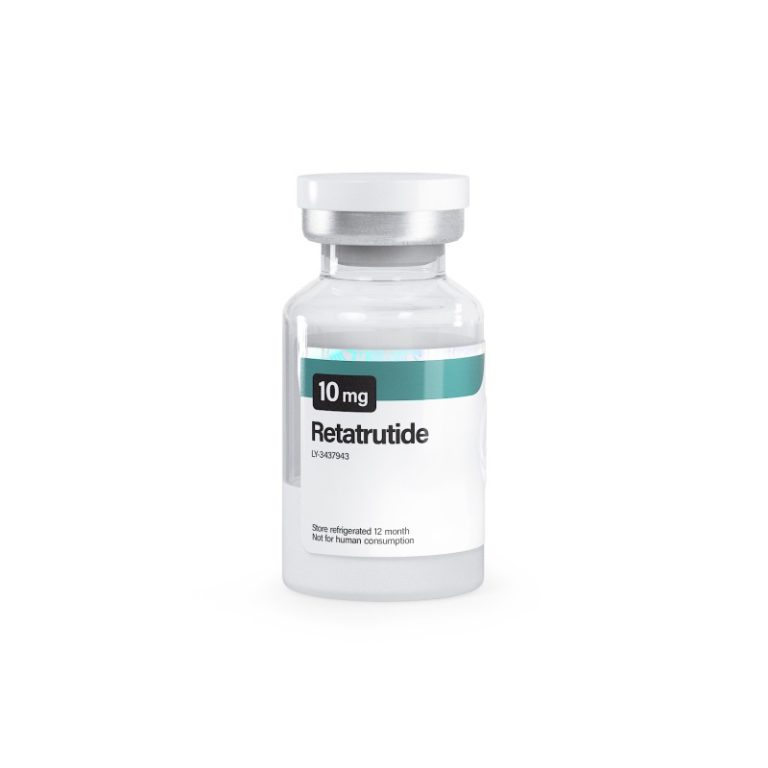
Retatrutide 10mg (GLP-1/GIP/Glucagon Triple Agonist) Overview | iRoids Pharma
Retatrutide is a synthetic peptide compound developed by Eli Lilly and Company. It functions as a triple receptor agonist simultaneously activating glucagon-like peptide-1 receptors, glucose-dependent insulinotropic polypeptide receptors, and glucagon receptors. This triple agonist mechanism distinguishes Retatrutide from dual agonists like Tirzepatide and single agonists like Semaglutide currently approved for clinical use. At iRoids Pharma, we carry Retatrutide 10mg as part of our peptide research compound inventory for customers in markets where the compound is legally available. Retatrutide does not currently carry FDA approval for any clinical indication and remains in active clinical trial investigation. Like all research compounds, it carries significant health and legal considerations that anyone researching it should understand clearly before forming an opinion.
Retatrutide emerged from Eli Lilly’s ongoing research into incretin-based therapies following the clinical success of their GIP and GLP-1 dual agonist Tirzepatide, marketed under the brand name Mounjaro. Phase 2 clinical trial results published in 2023 in the New England Journal of Medicine generated significant attention in both medical and broader public communities due to documented weight reduction outcomes that exceeded those observed with single and dual agonist compounds in comparable trial settings. These results positioned Retatrutide as one of the most closely followed compounds in current obesity and metabolic disease research. Understanding what Retatrutide is, where it stands in clinical development, and what risks it carries is the essential starting point for anyone researching it for educational purposes.
This article provides general educational information about Retatrutide 10mg. It does not constitute medical advice, does not recommend or encourage use outside of legitimate clinical trial participation or medical supervision, and does not provide dosage or protocol guidance of any kind.
Product Specifications
Website: iroidspharma.com Developer: Eli Lilly and Company Product Name: Retatrutide 10mg Chemical Classification: Triple receptor agonist peptide Receptor Targets: GLP-1 receptor, GIP receptor, Glucagon receptor Common Designation: GLP-1/GIP/Glucagon triple agonist Concentration: 10mg per vial Presentation: Lyophilized powder requiring reconstitution or solution format depending on supplier Molecular Structure: Synthetic peptide Half-Life: Approximately 6 days based on Phase 2 trial data Route of Administration: Subcutaneous injection Research Status: Phase 3 clinical trials ongoing as of available research data FDA Approval Status: Not approved. Active clinical investigation. Legal Status: Research compound. Regulatory status varies by jurisdiction.
What Is Retatrutide
Retatrutide is a synthetic peptide that simultaneously activates three distinct metabolic receptors: the GLP-1 receptor, the GIP receptor, and the glucagon receptor. Each of these receptor targets plays a distinct role in metabolic regulation, and simultaneously activating all three produces a combined metabolic effect that differs from activating any single receptor or dual receptor combination alone.
The GLP-1 receptor pathway regulates appetite, gastric emptying, and insulin secretion in a glucose-dependent manner. GLP-1 receptor agonism is the mechanism behind approved weight management and diabetes medications including Semaglutide and Liraglutide. The GIP receptor pathway also regulates insulin secretion and plays a role in fat metabolism and energy storage. Dual GLP-1 and GIP receptor agonism is the mechanism behind Tirzepatide. The glucagon receptor pathway regulates hepatic glucose production, energy expenditure, and fat metabolism. Adding glucagon receptor agonism to the GLP-1 and GIP pathway activation is the mechanism that distinguishes Retatrutide as a triple agonist and the approach Eli Lilly pursued to produce greater metabolic effects than dual agonism alone.
The approximately 6-day half-life of Retatrutide observed in Phase 2 trials supports a once-weekly subcutaneous injection dosing interval, consistent with other long-acting GLP-1 based compounds currently in clinical use.
Clinical Development Status
Retatrutide’s clinical development status is a critical context point for anyone researching this compound. Understanding where it stands in the regulatory process is essential before forming any opinion about it.
Phase 2 Clinical Trial Results
Phase 2 clinical trial data for Retatrutide in obesity management was published in the New England Journal of Medicine in 2023. This trial documented mean body weight reductions of approximately 17 to 24 percent over 48 weeks across different dose cohorts. These results attracted significant medical and public attention because they exceeded the weight reduction outcomes documented with approved GLP-1 single agonists and were comparable to or exceeded results with Tirzepatide in similar trial timeframes.
The Phase 2 trial also documented improvements in metabolic markers including blood pressure, lipid levels, and blood glucose regulation in trial participants. These findings supported progression to Phase 3 trials.
Phase 3 Clinical Trials
Retatrutide entered Phase 3 clinical trials following the Phase 2 results. Phase 3 trials involve larger patient populations, longer treatment durations, and more comprehensive safety assessment than Phase 2. The Phase 3 program is evaluating Retatrutide for obesity management and type 2 diabetes management as primary indications. Phase 3 results and subsequent regulatory submission are required before FDA approval consideration.
No FDA Approval
Retatrutide does not currently carry FDA approval for any clinical indication. It is an investigational compound in active clinical development. The clinical trial process including Phase 3 completion, regulatory submission, and FDA review represents a multi-year pathway before potential approval consideration. Using investigational compounds outside of supervised clinical trial settings involves risks that are distinct from using approved medications with established safety profiles.
About iRoids Pharma Retatrutide Products
iRoids Pharma carries Retatrutide 10mg as a research compound for customers in markets where the compound is legally available. Research compound Retatrutide available through non-clinical channels differs from the investigational compound used in Eli Lilly’s clinical trials. Research compound versions are produced by third-party peptide manufacturers rather than by Eli Lilly and do not carry the manufacturing quality oversight of clinical trial material. Purity, concentration accuracy, and manufacturing standards vary significantly between research peptide suppliers. Customers researching Retatrutide should be aware of these distinctions when evaluating any non-clinical source.
As with all research compounds, customers are responsible for confirming the legal status of Retatrutide in their specific jurisdiction before purchasing. Visit iroidspharma.com to check current availability and pricing.
Why Retatrutide Generates Significant Discussion
Retatrutide attracts discussion across medical, research, and performance communities for reasons directly related to its Phase 2 trial results and its triple agonist mechanism.
Weight Management Research
The Phase 2 trial weight reduction outcomes of approximately 17 to 24 percent mean body weight reduction over 48 weeks positioned Retatrutide among the most effective pharmacological weight management approaches documented in clinical research. For context, approved GLP-1 agonists including Semaglutide at the approved weight management dose documented approximately 15 percent mean weight reduction in Phase 3 trials. These comparative figures drive significant research and public interest in Retatrutide’s ongoing development.
Triple Agonist Mechanism
The triple agonist mechanism targeting GLP-1, GIP, and glucagon receptors simultaneously represents a pharmacological approach that generates significant scientific interest. Each receptor target contributes differently to metabolic regulation. Understanding how simultaneous activation of all three produces the observed clinical outcomes is an active area of metabolic research.
Metabolic Disease Research
Beyond weight management, Retatrutide is under investigation for type 2 diabetes management, non-alcoholic fatty liver disease, and other metabolic conditions where the combined receptor agonism may produce clinically meaningful outcomes. This broad metabolic research interest extends the discussion of Retatrutide beyond single indication contexts.
Comparison With Other GLP-1 Based Compounds
Discussions comparing Retatrutide with approved and investigational GLP-1 based compounds are frequent in medical and research communities. Comparing Retatrutide with Semaglutide, Tirzepatide, and other compounds in the same drug class helps contextualize its position in the evolving metabolic disease treatment landscape.
Retatrutide Versus Other GLP-1 Based Compounds
Understanding how Retatrutide compares to related compounds helps clarify its specific position in metabolic research discussions.
Retatrutide Versus Semaglutide
Semaglutide is a GLP-1 single receptor agonist approved for type 2 diabetes management and weight management under the brand names Ozempic and Wegovy. It activates only the GLP-1 receptor. Phase 2 trial data positions Retatrutide as producing greater weight reduction than Semaglutide in comparable timeframes through its additional GIP and glucagon receptor activity. Semaglutide carries full FDA approval with a comprehensively documented safety profile. Retatrutide does not yet carry FDA approval.
Retatrutide Versus Tirzepatide
Tirzepatide is a GLP-1 and GIP dual receptor agonist approved for type 2 diabetes management and weight management under the brand names Mounjaro and Zepbound. It activates two of the three receptors targeted by Retatrutide. Phase 2 trial data suggests Retatrutide produces comparable or greater weight reduction than Tirzepatide at equivalent timeframes through the additional glucagon receptor activity. Tirzepatide carries full FDA approval with a documented safety profile. Retatrutide does not yet carry FDA approval.
Retatrutide Versus Cagrilintide Plus Semaglutide
Cagrilintide combined with Semaglutide represents another investigational approach to enhanced weight management currently in clinical trials. Both Retatrutide and the Cagrilintide plus Semaglutide combination represent different pharmacological strategies for exceeding the efficacy of single approved compounds. Neither currently carries FDA approval.
Risks and Health Considerations
Retatrutide 10mg carries a significant and partially characterized risk profile that anyone researching this compound should understand clearly.
Gastrointestinal Side Effects
Gastrointestinal side effects are the most consistently documented adverse effects across GLP-1 based compounds including Retatrutide. Phase 2 trial data documented nausea, vomiting, diarrhea, constipation, and decreased appetite as the most common adverse events. These effects are generally more pronounced during dose escalation periods and tend to decrease in severity over time. The degree of gastrointestinal side effects documented with Retatrutide in Phase 2 trials was generally consistent with other compounds in the GLP-1 based drug class.
Heart Rate Increase
GLP-1 receptor agonists are associated with modest increases in resting heart rate. Retatrutide Phase 2 trial data documented mean heart rate increases in treated participants. The clinical significance of this effect in individuals with pre-existing cardiovascular conditions requires medical assessment before use.
Gallbladder Effects
Rapid weight loss from any cause, including GLP-1 based pharmacotherapy, is associated with increased risk of gallstone formation and gallbladder disease. This risk is documented across the GLP-1 drug class and represents a consideration in any discussion of extended use of these compounds.
Thyroid Effects
GLP-1 receptor agonists are associated with increased calcitonin levels and thyroid C-cell hyperplasia in rodent studies. This finding resulted in a boxed warning on approved GLP-1 medications noting that these compounds are contraindicated in individuals with a personal or family history of medullary thyroid carcinoma or multiple endocrine neoplasia syndrome type 2. The applicability of this rodent finding to humans is debated in clinical literature but the contraindication is maintained across the approved GLP-1 drug class as a precautionary measure.
Muscle Mass Considerations
Weight loss from GLP-1 based pharmacotherapy includes loss of lean muscle mass alongside fat mass reduction. The proportion of lean mass versus fat mass lost varies between individuals and may be influenced by dietary protein intake and physical activity during treatment. Research into optimizing body composition outcomes during GLP-1 based weight loss is an active area of investigation.
Unknown Long-Term Safety Profile at Phase 3 Scale
While Phase 2 safety data exists for Retatrutide, Phase 3 trials involving larger populations and longer durations are required to fully characterize the safety profile. Using a compound prior to Phase 3 completion and regulatory review involves exposure to safety risks that have not yet been fully characterized at scale.
Quality and Purity of Research Compound Sources
Research compound Retatrutide produced by third-party peptide manufacturers outside of Eli Lilly’s clinical program does not carry the manufacturing oversight of clinical trial material. Purity, concentration accuracy, and sterility standards vary between suppliers. These quality variables represent an additional risk category beyond the pharmacological risks of the compound itself.
Legal Status
Retatrutide’s legal status as a research compound varies by jurisdiction. It does not carry controlled substance classification in most countries but is subject to regulation as an unapproved drug in many jurisdictions. Research the legal status in your specific country before purchasing from iRoids Pharma.
Frequently Asked Questions About Retatrutide at iRoids Pharma
Is Retatrutide 10mg Available at iRoids Pharma?
Yes. iRoids Pharma carries Retatrutide 10mg as a research compound for customers in markets where it is legally available. Visit iroidspharma.com to check current availability and pricing.
Is Retatrutide FDA Approved?
No. Retatrutide does not currently carry FDA approval for any indication. It is an investigational compound in active Phase 3 clinical development by Eli Lilly. FDA approval requires completion of Phase 3 trials and regulatory review.
How Does Retatrutide Differ From Semaglutide?
Semaglutide is a GLP-1 single receptor agonist. Retatrutide simultaneously activates GLP-1, GIP, and glucagon receptors. Phase 2 trial data suggests greater weight reduction with Retatrutide compared to Semaglutide in comparable timeframes. Semaglutide carries full FDA approval while Retatrutide does not.
What Were the Phase 2 Trial Results?
Phase 2 trial data published in 2023 documented mean body weight reductions of approximately 17 to 24 percent over 48 weeks across dose cohorts. These results generated significant medical and public attention due to their magnitude relative to currently approved compounds.
What Are the Main Side Effects?
The most commonly documented side effects in Phase 2 trials include nausea, vomiting, diarrhea, constipation, and decreased appetite. Heart rate increases were also documented. The full side effect profile will be more comprehensively characterized following Phase 3 trial completion.
Is Retatrutide Legal to Purchase?
Legal status varies by jurisdiction. Retatrutide does not carry controlled substance classification in most countries but is subject to regulation as an unapproved drug in many jurisdictions. Customers are responsible for confirming legal status in their specific country before purchasing from iRoids Pharma.
What to Consider Before Purchasing Retatrutide
Retatrutide generates significant discussion in medical research, metabolic health, and broader public communities following its Phase 2 trial results. Clinical discussion draws from peer-reviewed research published in medical journals. Much of the broader community discussion draws from incomplete interpretation of clinical trial data and anecdotal reports. Relying on non-clinical sources for decisions about investigational compound use consequently carries real risk.
If you are researching Retatrutide for educational purposes, prioritize peer-reviewed clinical research and consult a licensed medical professional. The compound is currently under active clinical investigation and its full safety profile has not yet been established at Phase 3 scale. Furthermore, research compound versions produced outside of Eli Lilly’s clinical program carry additional quality and purity considerations that differ from clinical trial material.
For customers in markets where Retatrutide is legally available as a research compound, visit iroidspharma.com to check current product availability, pricing, and stock levels.
Reviews
There are no reviews yet.
Related products

Uncategorized

Uncategorized
Uncategorized
Uncategorized
Uncategorized
Uncategorized
Uncategorized

Uncategorized
Be the first to review “Retatrutide 10mg USA”